
Photo: Benoît Prieur · CC0
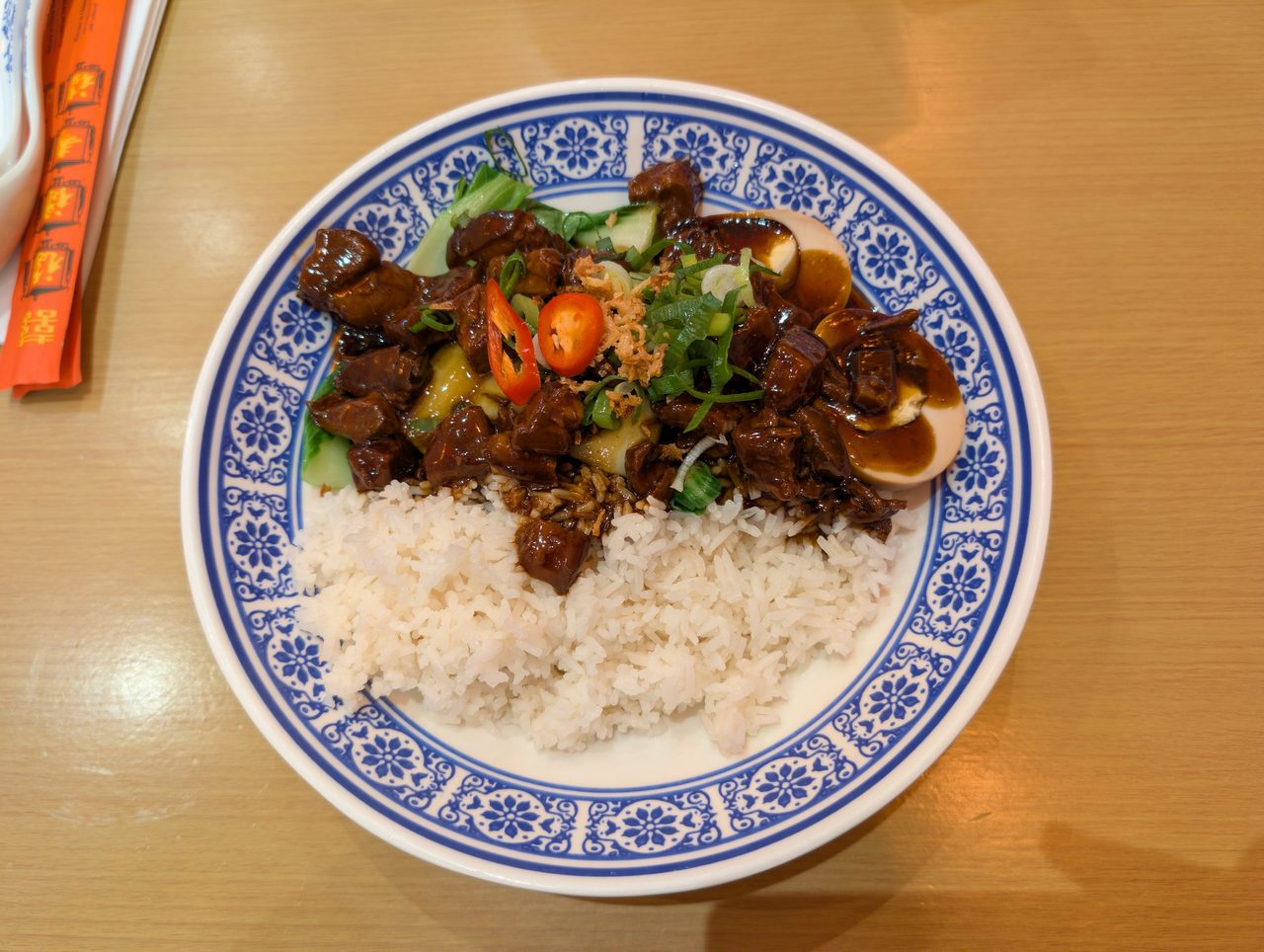
Beef Noodle Soup (Red-Braised)
Taiwan's beef noodle soup: shin simmered over two hours with doubanjiang, whole spices and tomato, poured over thick wheat noodles. Parboiling the beef from cold water and skimming, then never letting the pot boil again, are what decide how clear the broth ends up.
Ingredients
- Beef
- beef shin · or shank; a coarse-grained cut is what you want800 g
- beef tendon · optional; add 30 minutes if you use it200 g
- To fry
- neutral oil3 tbsp
- leek · in large pieces2 stalks
- ginger · thickly sliced40 g
- garlic · whole6 cloves
- doubanjiang · has to be fried gently2 tbsp
- tianmianjiang · sweet bean sauce; hoisin will do1 tbsp
- tomatoes · the quiet ingredient in the Taiwanese version; fry until collapsed2 pcs
- Broth
- Shaoxing wine100 ml
- soy sauce6 tbsp
- sugar · rock sugar is better1 tbsp
- water · enough to cover the beef2.5 L
- Spices (tied in cloth)
- star anise3 pcs
- cassia bark · 5cm1 piece
- Sichuan peppercorns1 tsp
- cloves · any more and they bury everything else3 pcs
- bay leaves2 pcs
- dried tangerine peel · optional1 piece
- Noodles and garnish
- thick wheat noodles · hand-pulled or udon; thin noodles get lost in this broth400 g
- suan cai · Taiwanese pickled mustard greens: rinse, squeeze dry, chop60 g
- bok choy · 30 seconds in the noodle water200 g
- spring onions · finely sliced3 stalks
Steps
- ⏲ 30 min
Cut the beef into large 4-5cm pieces and soak in cold water for 30 minutes, changing the water once.
- ⏲ 10 min
Parboil starting from cold water. As it comes up, skim the grey foam, boil 2 minutes more, then drain and rinse the pieces. Dropped into boiling water instead, the outside seizes first and traps everything inside — and the broth stays cloudy to the end.
- ⏲ 3 min
Fry the leek, ginger and garlic in the oil over medium heat for 3 minutes.
- ⏲ 2 min
Lower the heat and fry the doubanjiang and tianmianjiang for 2 minutes, until the oil reddens and the smell turns toasty. Scorch it here and the whole pot is bitter.
- ⏲ 4 min
Add the tomatoes and fry 3-4 minutes until completely collapsed. In the Taiwanese version they are there for acidity and savouriness, which is what opens up the salt in the bean paste.
- ⏲ 1 min
Pour in the Shaoxing wine, scrape the base clean and boil it a minute to drive off the alcohol.
- ⏲ 5 min
Add the blanched beef, soy, sugar, 2.5L of water and the spice bundle. Tying the spices in cloth is what keeps fragments out of the broth and makes them easy to lift out.
- ⏲ 120 min
Bring it up once, then drop to a bare simmer — surface just trembling — for 2 to 2.5 hours with the lid ajar. A rolling boil clouds the broth and dries the meat, and it is the usual way this dish goes wrong.
- ⏲ 30 min
It is done when a chopstick meets no resistance. With tendon in, give it another 30 minutes. Lift out the spice bundle and skim as much fat as you like.
- ⏲ 5 min
Rinse the suan cai, squeeze it dry and chop it. Getting the salt out is what stops it shifting the seasoning of the bowl.
- ⏲ 5 min
Blanch the bok choy 30 seconds in plenty of water, then cook the noodles in the same pot. Do not rinse them — shake them dry and put them straight in the bowl.
- ⏲ 3 min
Pile the beef on the noodles and pour the hot broth over. Top with suan cai, bok choy and spring onion. The broth is better the next day, so cook it the evening before if you can.
Tips & Variations
Variations
- Clear-simmered (qing dun). The other branch: no doubanjiang, no soy, just beef, spices and salt. It puts the meat itself forward, which is what you want when the beef is good. Drop the bean pastes, tomato and soy from the recipe above.
- The Sichuan-leaning version adds a tablespoon of chilli oil and five dried chillies to the spice bundle; Taiwan calls that style chuan wei.
- A pressure cooker brings it down to 40-50 minutes, but a slow simmer gives a clearer broth — inside a pressure cooker the liquid is boiling the whole time.
- Over rice instead of noodles it becomes beef soup rice, which sits in the same place as lu rou fan.
- Hong shao rou applies the same red-braise to pork; frying the bean paste gently for colour and aroma is the identical move.
Tips
- Parboil from cold water. This single step decides how clear the broth is. Into hot water, the surface proteins set first and seal everything inside, and no amount of skimming afterwards recovers it (stocks and broth).
- Simmer, never boil. Aim for a surface that only trembles. A rolling boil emulsifies the fat and clouds the broth, and it contracts the muscle fibres into dryness (braising: collagen and time).
- Use shin or shank. Tenderloin cannot survive two hours and simply falls apart. You want a collagen-rich cut, because that collagen turning to gelatin is what gives the broth its body.
- Do not skip the tomato. It is the difference between the Taiwanese bowl and a generic red-braised noodle soup: its acidity holds down the salt in the bean paste and keeps the broth from feeling heavy (building umami).
- Three cloves, maximum. They are the loudest spice in the bundle and will bury the star anise and cassia (blooming spices).
- Suan cai is not a garnish. It is the acid that cuts a rich broth, and without it the second half of the bowl becomes hard work. Rinsed pickled mustard greens are the nearest substitute.
- Cook the broth the day before. Overnight the spices even out and the fat sets firm enough to lift off. It keeps 4 days refrigerated, 2 months frozen.
The basics behind this dish
- Dough and Gluten: When to Build It and When to Avoid ItThe same flour and water becomes a dumpling wrapper or a tender pancake. The difference is whether you built gluten or avoided it — and kneading and resting do different jobs.
- Why Sauces Split: Emulsions and Pan SaucesA cream sauce breaking and a carbonara scrambling are the same failure. Temperature and emulsifiers — plus how to bring a split sauce back.
- Knife Skills: Grip, Cuts, and Why Size MattersHow you hold the knife matters more than how fast you cut. The pinch grip, the claw hand, and why uniform size is a cooking decision rather than a cosmetic one.
More of the same kind


More from this country


Sign in to edit.
AI-drafted, editor-reviewed · edits: 0 ·Edit history
https://cookiki.com/en/r/beef-noodle-soup · cookiki · User contributions are licensed under CC BY-SA 4.0.