
Photo: Ростислав Александрович Луценко · CC BY-SA 4.0
Blini (Yeast-Raised Buckwheat Pancakes)
Russian pancakes from a buckwheat and wheat batter raised with yeast. What separates them from every other pancake is how they are leavened. Baking powder makes gas while the pan is hot; yeast spends an hour or two beforehand making gas and acid together. So blini come out faintly sour rather than merely fluffy, which is why they hold up under soured cream or smoked fish instead of being flattened by them.
Ingredients
- Sponge (opara)
- milk · warmed to about 35°C250 ml
- dried yeast5 g
- sugar · this is for the yeast, not for sweetness1 tsp
- plain flour100 g
- Main batter
- buckwheat flour · it carries the colour and the flavour100 g
- plain flour · it carries the structure; buckwheat alone will not100 g
- milk · lukewarm250 ml
- eggs · yolks and whites separated2
- melted butter40 g
- salt1 tsp
- Without buckwheat (optional)
- plain flour · in place of the 100g buckwheat plus 100g plain200 g
- To cook and serve
- butter · for the pan40 g
- soured cream · smetana200 g
- smoked salmon · optional150 g
- dill · chopped2 tbsp
- melted butter · brushed over them as they come off3 tbsp
Steps
- ⏲ 60 min
Make the sponge. Whisk the sugar and yeast into 250ml of milk warmed to 35°C, stir in 100g of plain flour to a loose batter, cover, and leave somewhere warm for 1 hour. It is ready when the surface is covered in bubbles and it has roughly doubled. Milk that is too hot kills the yeast — check it against the back of your hand.
Into the risen sponge go the buckwheat flour, the rest of the plain flour, the lukewarm milk, the egg yolks, melted butter and salt. Mix until smooth. It should be a little thicker than crepe batter — pouring slowly off a spoon rather than running.
- ⏲ 60 min
Cover and ferment another 1 hour. This is the hour that makes acid alongside the gas, and that acid is the faint sourness blini are recognised by. Do not stir the risen batter down.
Whisk the egg whites to firm peaks and fold them in — lay them on top and cut through a few times, rather than stirring. From here the batter will not wait for you, so have the pan already hot.
Heat a small pan (about 15cm) over medium heat and brush it thinly with butter. Add one ladle of batter and swirl to spread it. Do not stretch it thin like a crepe — blini need some thickness for the rise to show.
- ⏲ 1 min
When the surface is covered in small holes and the edge looks dry, flip and give it 1 more minute. The first side takes about two. The first one almost always fails; treat it as your pan thermometer.
Stack them on a plate and brush melted butter between every layer. It stops them drying and stops the stack welding together. Keep a second plate over the top until you have finished cooking.
Serve with soured cream and chopped dill. For smoked salmon or caviar, spread the soured cream first and lay it on top. Fold them into squares or roll them into cylinders and eat them with your hands.
Tips & Variations
Variations
- All wheat: leave the buckwheat out and they come out paler and milder. This is now the more common version in Russian homes, and the yeast stays.
- Oladyi (оладьи): the same batter dropped thicker in small rounds. If blini are thin and folded, oladyi are thick and eaten with a fork.
- Blinchiki (блинчики): thin, unleavened, filled and rolled or folded. These are much closer to a crepe, and because the name is a diminutive of blini the two get confused constantly.
- What goes on them: savoury is soured cream, smoked salmon, herring, caviar, fried mushrooms or chopped egg; sweet is jam, honey or curd cheese. Putting both on the table at once is normal.
- Maslenitsa: the week before Lent is Blini Week, and the dish comes out of using up eggs and dairy before the fast. The round shape is usually explained as the sun.
- How they differ from pancakes and waffles: those use baking powder — gas starts the moment the batter is mixed, so you mix and cook. Blini use yeast, which costs two hours before any cooking and repays it in acid and fermentation flavour rather than gas alone (fermentation basics).
- Against Irish soda bread: that one adds acid to react with a base; blini make acid and use it as flavour. The same acid is the means in one and the result in the other.
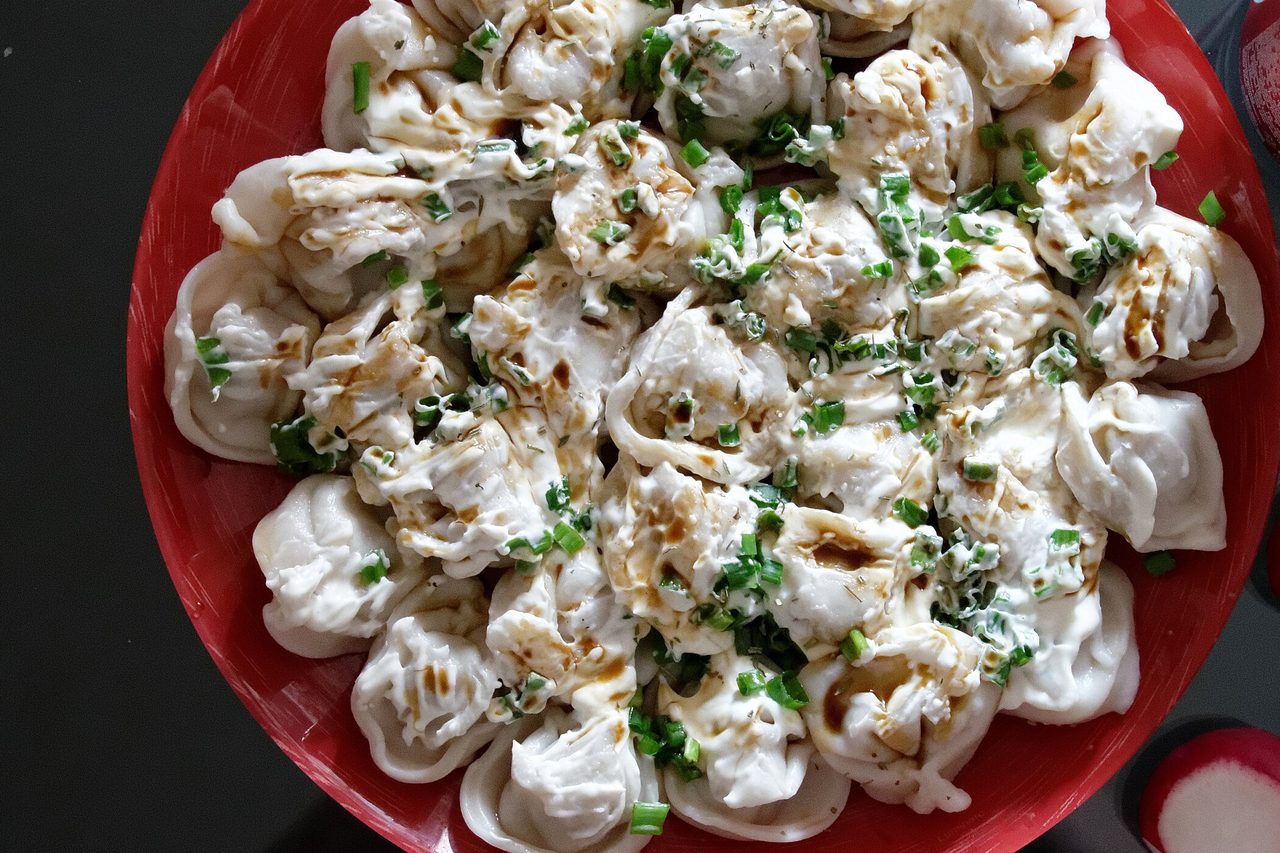
- What they are served with: the same table as borscht, pelmeni or beef stroganoff — soured cream belongs to all four.
Tips
- Yeast is not here only to make them rise. Baking powder would do that. What yeast gives is two hours of acid and fermentation flavour, and that is what stands up to soured cream, smoked fish and caviar. Cut the time and you have made buckwheat pancakes.
- Milk at 35°C. Hotter kills the yeast, colder takes hours. A drop on the back of your hand should feel like nothing at all (dairy and heat).
- Buckwheat alone will not work. It has no gluten, so there is no net to hold the gas the yeast makes. Half wheat flour is what keeps the rise (choosing flour, dough and gluten).
- Do not stir the risen batter. Knocking out two hours of gas with one stir is the commonest mistake. Lift ladlefuls off gently and leave the rest alone.
- Whites last, folded. This adds mechanical bubbles on top of the biological ones. Stir them in and you lose both at once (cooking eggs).
- The first one is the test one. It tells you the pan temperature, the butter and the batter consistency. True of every pancake, and more annoying here because the batter took two hours.
- Do not spread them crepe-thin. The point of a blin is that it rose, and paper-thin hides it. Fix one ladleful to the size of your pan and keep it consistent.
- Butter between the layers. Stacked bare, they steam themselves into a single mass. Butter keeps a film between them and stops them drying (butter).
- Keep the plate covered. Cooking twenty of them means the first ones sit and stiffen; a plate over the top holds them soft in their own steam (serving temperature).
- Put something savoury and something sweet out together. Soured cream and jam side by side is the Russian way, and it makes one batch into two dishes.
- Do not keep leftover batter for the next day. It over-ferments sour and the gas is gone. Cook the lot instead and freeze the pancakes, then reheat them in a pan (reviving leftovers).
The basics behind this dish
- Heat Control: Preheating, Oil, and Reading the PanThe same ingredients become a different dish depending on pan temperature. When to add the oil, how to read heat by sound, and which dishes want low heat instead.
- Serving Temperature: Why Some Dishes Wait and Some CannotWhy cold dishes need heavier seasoning, why rice and rice cake go stale fastest in the fridge of all places, and the dishes where letting the steam off is the point.
- Dough and Gluten: When to Build It and When to Avoid ItThe same flour and water becomes a dumpling wrapper or a tender pancake. The difference is whether you built gluten or avoided it — and kneading and resting do different jobs.
More of the same kind


More from this country



Sign in to edit.
AI-drafted, editor-reviewed · edits: 0 ·Edit history
https://cookiki.com/en/r/blini · cookiki · User contributions are licensed under CC BY-SA 4.0.