
Photo: TheRealDapperDan · CC BY-SA 4.0
Francesinha (Porto Sandwich in Beer and Tomato Sauce)
What Porto made of the croque-monsieur, several sizes heavier. Ham, sausage and steak stacked between slices of plain white bread, sheeted in cheese and melted under a grill, then flooded at the last moment with a hot sauce of beer and tomato. What differs from one house to the next is not the filling but the sauce, and so is almost everything there is to learn here.
Ingredients
- Serves 2
- white sandwich bread · thick-cut and soft. Crusty bread is wrong for this6 slices
- beef sirloin · in two thin steaks200 g
- ham4 slices
- linguica · smoked sausage, split lengthways1
- fresh sausages · grilled2
- sliced cheese · a good melter, and enough to sheet the outside8 slices
- eggs · optional, fried soft and set on top2
- potatoes · for chips alongside2
- Sauce
- lager330 ml
- tomatoes · ripe, or 200g tinned3
- onion · finely chopped1
- garlic · minced3 cloves
- beef stock300 ml
- butter20 g
- plain flour1 tbsp
- piri-piri · the heat; adjust to taste1 tsp
- bay leaves2
- port · or leave it out2 tbsp
- salt0.5 tsp
- black pepper0.25 tsp
Steps
- ⏲ 8 min
Melt the butter and cook the onion and garlic over a low heat for 8 minutes until completely soft. Take no colour on them — the colour of this sauce comes from tomato and beer, not from the onion.
- ⏲ 2 min
Stir in the flour and cook it 2 minutes to lose the raw taste, then let the beer down into it a little at a time and add the tomatoes, stock, piri-piri, bay and port.
- ⏲ 25 min
Simmer 25 minutes over a low heat. The rough edge of the beer cooks off and the backbone stays. Sieve it and set the consistency loose enough to pool on the plate rather than thick. Left overnight it is better still.
- ⏲ 5 min
Cook the meats. Sausages 5 minutes; the steaks a minute and a half a side in a hot pan with nothing but salt and pepper. The sauce covers all of it later, so do not season hard here.
Stack ham, linguica, sausage and steak on a slice of bread, put a slice over, and build a second layer to make three tiers. Sheet cheese over the top and down the sides. The covering is the point — the cheese is a wall that stops the sauce going straight into the bread.
- ⏲ 4 min
Grill it (broiler) for 4 minutes, until the cheese has flowed down and wrapped the sides. Do not let it brown and crisp — set cheese is a lid, not a wall.
Move it to a plate, add a soft fried egg if using, and pour the sauce over from above just short of boiling so it pools around the base. Lukewarm sauce sets the cheese where it lands.
Serve the chips outside the sauce. Sitting in it they go soft immediately. Eat it with a knife and fork — this is not a sandwich you pick up.
Tips & Variations
Variations
- The sauce is the house. Porto restaurants do not publish theirs. That beer and tomato are the frame is uncontested; on top of that, whisky, port or brandy, milk or cream, meat trimmings and the amount of piri-piri all differ. The version above is a baseline, not an answer.
- How hot: tourist versions are mild and neighbourhood ones much less so. Halve the piri-piri or double it and it is still a francesinha (chilli and heat).
- Francesinha poveira: the Povoa de Varzim version, made flatter and wider so the sauce sits on it differently.
- Vegetarian versions are common in Porto itself: mushrooms and soy protein in the stack, and mushroom liquor in place of the beef stock (building umami).
- With or without the egg: both are served. The yolk running into the sauce pulls the heat back, so if you have made it hot, the egg is the balancing move.
- Its ancestor is the croque-monsieur: the accepted account is that Daniel da Silva brought the idea back to Porto in the 1950s from France, and the name means "little French girl". Set beside croque-monsieur, what got added is the sauce and the meat, wholesale.
- The same family: grilled cheese keeps only the cheese, and jambon-beurre takes everything else away. It has nothing in common with a hamburger beyond meat between bread.
- Other things served under melted cheese: French onion soup, lasagna.
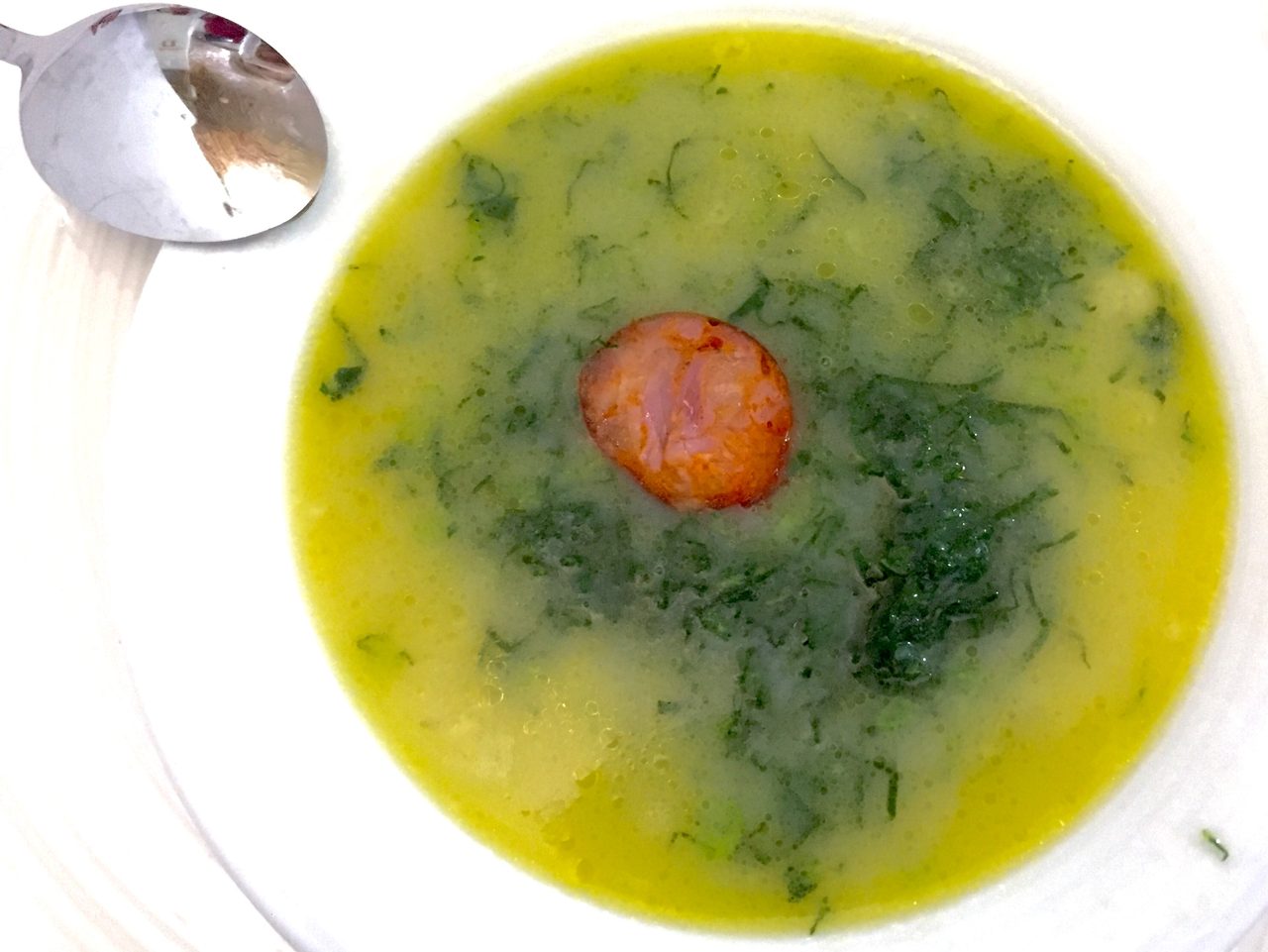
- Same country: caldo verde, pastel de nata.
Tips
- The consistency of the sauce is the whole dish. Thick, it becomes a gravy sitting on the bread; too thin and it is soup. Aim for something that pools on the plate but still coats the back of a spoon — looser than cream, heavier than milk (thickening sauces).
- The cheese is a wall, not a lid. Melt it over the top and let it run down the sides. Anywhere the bread is exposed, the sauce goes straight in and it is porridge within five minutes.
- Sauce last, and hot. Poured in advance, the bread collapses before it reaches the table. Just short of boiling, over a plated sandwich, is how it is done (serving temperature).
- It has to be soft white bread. A crusty loaf repels the sauce and the whole filling pulls out in one bite. Sandwich bread takes the sauce up and still holds its layers.
- Cook the beer properly. Twenty-five minutes takes the harsh bitterness and the carbonation off a lager and leaves malt sweetness and a bitter finish. Cut short, that raw bitterness sits over everything else (cooking alcohol).
- Season the meat lightly. The sauce is salty, hot and rich; season the filling to match and one bite is as much as anyone wants (balancing flavour).
- Take no colour on the onion. The sweetness of browned onion pulls against this sauce. Soften it over a low heat and stop (browning).
- Make the sauce the day before. Overnight the beer's edge settles and the spice spreads. It is also the only part of this that can be done ahead.
- Do not brown the cheese. Left under the grill until it colours, the surface sets, and the sauce runs off it instead of soaking in. Stop it at the point where it flows (dairy and heat).
- Chips on the side. Chips sitting in the sauce are soft within a minute. Put them at the edge of the plate or in their own dish and dip (deep-frying).
- The leftover sauce is the useful part. It suits steak, potatoes and a fried egg the next morning; freeze it. It is very nearly reason enough to make this (reviving leftovers).
- It is a plate dish. Nothing about it assumes hands — not the height, not the amount of sauce. Knife and fork.
The basics behind this dish
- Building Umami: Glutamate, Synergy, and LayersUmami is built in layers, not added from one bottle. The key is synergy: glutamate plus nucleotides multiply each other rather than adding up.
- Browning and the Maillard ReactionMeat fails to brown for one of three reasons: it is wet, the pan is cool, or you put too much in at once. Plus how the brown film stuck to the pan becomes your sauce.
- Cooking Meat: Temperature, Resting, and Cutting Against the GrainDoneness is a core temperature, not a number of minutes. What resting actually does, how to handle a thick cut, and why the direction you slice changes the texture.
More of the same kind


More from this country


Sign in to edit.
AI-drafted, editor-reviewed · edits: 0 ·Edit history
https://cookiki.com/en/r/francesinha · cookiki · User contributions are licensed under CC BY-SA 4.0.