
Galinhada (One-Pot Chicken and Rice with Pequi)
One-pot chicken and rice from Goiás and Minas Gerais in central Brazil. The chicken is browned, onion, garlic and tomato go into the same pot, the rice is fried in the fat, and then the water goes in. The yellow comes from annatto (colorau). In Goiás it is cooked with whole pequi fruits, whose stones are covered in thin, tough spines, so the pulp is scraped off gently with the teeth. Never bite into one.
Ingredients
- Chicken
- chicken drumsticks and thighs · bone in, cut into pieces1 kg
- garlic · minced; half for seasoning the chicken4 cloves
- salt1.5 tsp
- black pepper1 pinch
- vegetable oil3 tbsp
- Rice
- long-grain rice · about 2 cups; rinsed and drained340 g
- onion · finely chopped1
- tomatoes · seeded and diced2
- green pepper · finely chopped1
- colorau (annatto powder) · or 1 tsp turmeric1 tbsp
- hot water600 ml
- lime juice1 tbsp
- bay leaves2
- Goiás style (optional)
- pequi · jarred or frozen; used whole, on the stone8
- To finish
- parsley and chives · chopped1 handful
Steps
- ⏲ 20 min
Toss the chicken with 1 tsp salt, the pepper and half the garlic and leave it 20 minutes.
- ⏲ 11 min
Heat the oil in a heavy pot and lay the chicken in skin side down. Brown it in two batches, without crowding, for 10-12 minutes, until deep brown. Leave whatever sticks to the bottom of the pot where it is.
- ⏲ 2 min 30 sec
If using pequi, add it now and roll it around for 2-3 minutes. The oil in the pot turns yellow and the smell rises.
- ⏲ 5 min
Add the onion, the rest of the garlic and the pepper and fry until soft, then the tomatoes and colorau, and fry 5 minutes more until the tomatoes collapse. Scrape the brown off the bottom of the pot with a wooden spoon as you go.
- ⏲ 2 min
Add the rice and fry 2 minutes, until every grain is coated in fat.
- ⏲ 19 min
Pour in the 600ml hot water with the lime juice, bay leaves and the rest of the salt, and stir once. When it boils, turn the heat to its lowest, cover and leave 18-20 minutes, until the water has gone. Do not stir.
- ⏲ 10 min
Turn off the heat and leave it covered 10 minutes to rest, then scatter over the parsley and chives, fork through lightly and serve.
Variations
- Without pequi: in São Paulo and Minas Gerais it is more often made without. Sweetcorn may go in instead, or boiled eggs on top.
- Guariroba: in Goiás a bitter palm heart, guariroba, often goes in alongside the pequi.
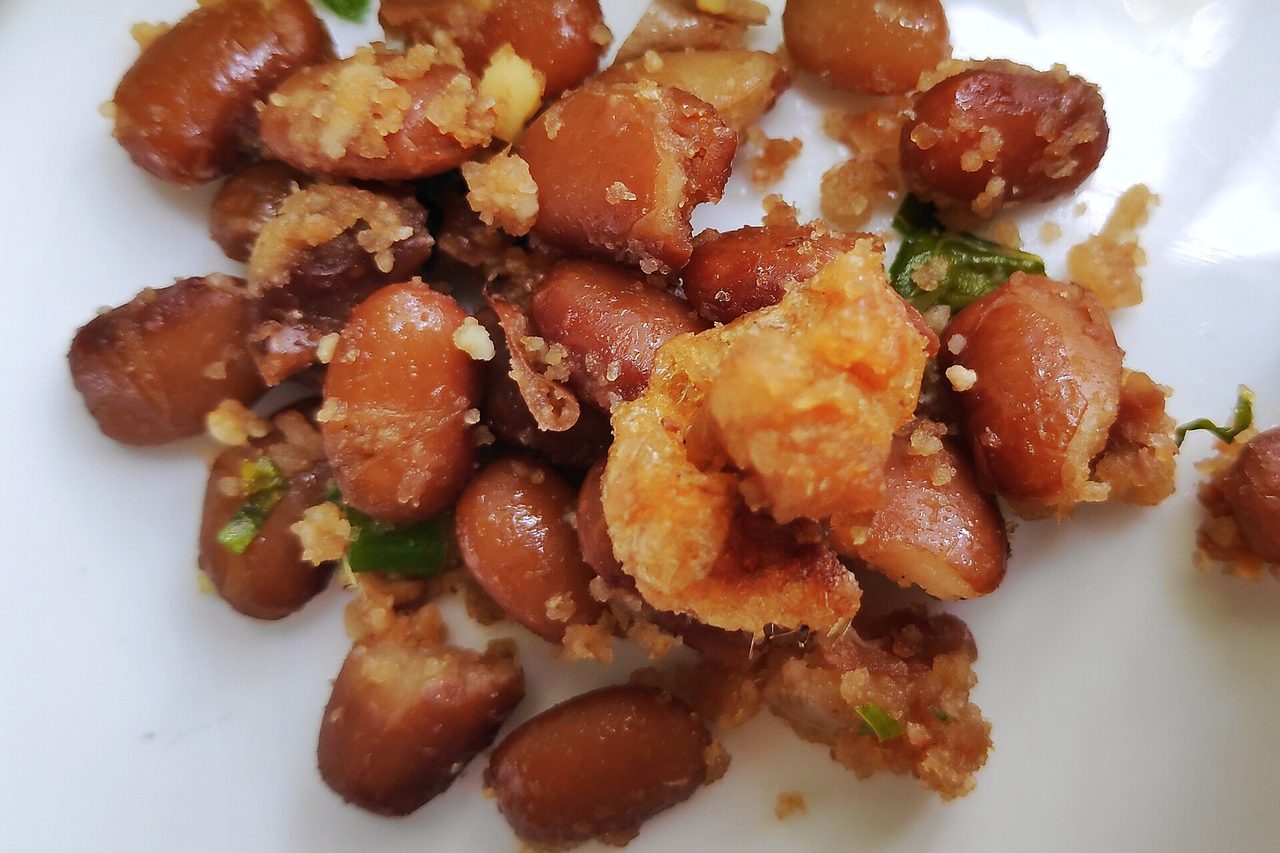
- The yellow: turmeric or saffron instead of colorau. The pot in the photograph is the Goiás kind, with pequi.
- For a crowd: it is a festival and village-party dish, cooked by the potful in a big cast-iron pan and shared.
Tips
- The colour is made in fat. The colorau is fried with the tomatoes in the oil and dyes the whole pot, the opposite route to paella, which steeps its saffron in the liquid.
More detail and the reasons why (5)
- Never bite a pequi. The stone sits in a shell covered with thin, tough spines. Bite into it and the spines come away and lodge in your mouth, painful and hard to get out. Lift a pequi out with a spoon, hold it, scrape off only the yellow pulp gently with your teeth and leave the stone at the side of the plate. For children, take the pulp off for them.
- Pequi smells strongly. Sweet, fruity and cheesy at once, it divides people sharply. The first time, put in only two or three. If you cannot get it, leave it out rather than imitate it.
- The chicken is browned for the rice's sake. What the skin and meat leave stuck to the pot dissolves the moment the water goes in, and the rice cooks in it (browning). That is why the chicken stays in the pot and each step follows in the same pan, with the bottom scraped as you go.
- Rice fried in fat keeps its grains apart. Fat coats each grain and slows the water reaching its starch, so the grains do not knit together (cooking rice). Not stirring it, unlike a risotto, serves the same aim: separate grains, not creaminess.
- Less water than plain rice. The tomatoes and the chicken give up liquid and the pequi adds some too. Start at about 600ml for 2 cups of rice, and if it is too wet in the last five minutes, take the lid off and let it steam away.
The basics behind this dish
- Browning and the Maillard ReactionMeat fails to brown for one of three reasons: it is wet, the pan is cool, or you put too much in at once. Plus how the brown film stuck to the pan becomes your sauce.
- Cooking Meat: Temperature, Resting, and Cutting Against the GrainDoneness is a core temperature, not a number of minutes. What resting actually does, how to handle a thick cut, and why the direction you slice changes the texture.
- Knife Skills: Grip, Cuts, and Why Size MattersHow you hold the knife matters more than how fast you cut. The pinch grip, the claw hand, and why uniform size is a cooking decision rather than a cosmetic one.
More of the same kind


More from this country


Sign in to edit.
Written with AI · how we check it · Edit history
https://cookiki.com/en/r/galinhada · cookiki · User contributions are licensed under CC BY-SA 4.0.