
Photo: F4fluids · CC BY-SA 4.0
Kufteh Tabrizi (Giant Stuffed Meatballs in Broth)
The big meatball of Tabriz in Iran. Minced beef is worked for a long time with cooked rice and yellow split peas, wrapped around a boiled egg, walnuts and dried apricot, shaped larger than a fist and simmered for an hour in a tomato broth. The broth is eaten first with torn bread; the kufteh comes after.
Ingredients
- minced beef600 g
- rice · cooked and cooled80 g
- yellow split peas · cooked and cooled80 g
- onion · grated and squeezed hard1
- leek · white part, finely chopped0.5
- parsley · chopped20 g
- dried tarragon or savory1 tbsp
- dried mint1 tsp
- ground turmeric1 tsp
- salt2 tsp
- black pepper0.5 tsp
- Filling
- hard-boiled eggs · peeled4
- walnuts · roughly chopped40 g
- dried apricots · or prunes4
- dried barberries · optional1 tbsp
- Broth
- onions · thinly sliced2
- oil3 tbsp
- ground turmeric0.5 tsp
- tomato paste2 tbsp
- water2 L
- salt1 tsp
- lavash or other flatbread · to tear into the broth2 sheets
Steps
- ⏲ 20 min
Simmer the yellow split peas for about 20 minutes until soft, and boil the rice in plenty of water for 12 minutes. Drain both and let them cool completely.
- ⏲ 11 min
Broth: fry the onions in the oil over medium heat for 10 minutes and set a handful aside for the filling. Add the turmeric and tomato paste, fry 1 minute, then pour in the water and salt and bring to the boil.
- ⏲ 5 min
Work the beef with the salt for 5 minutes, until it turns sticky: it should cling to your hand and start to stretch.
- ⏲ 5 min
Add the rice, split peas, squeezed onion, leek, herbs, turmeric and pepper, and work it another 5 minutes until it holds together as one mass.
Divide into four. With wet hands, flatten one into a thick disc on your palm, put an egg, walnuts, apricot, barberries and some fried onion in the middle, close it round them and roll it smooth, with no cracks.
- ⏲ 15 min
Turn the broth down to a gentle simmer and lower the kufteh in one at a time on a ladle. Leave them alone for the first 15 minutes: moved before the outside sets, they split.
- ⏲ 60 min
Half-cover and simmer gently for 60 minutes, basting every 20 minutes and turning them with two spoons. They are done when the middle of the meat layer reads 71°C or more.
- ⏲ 2 min
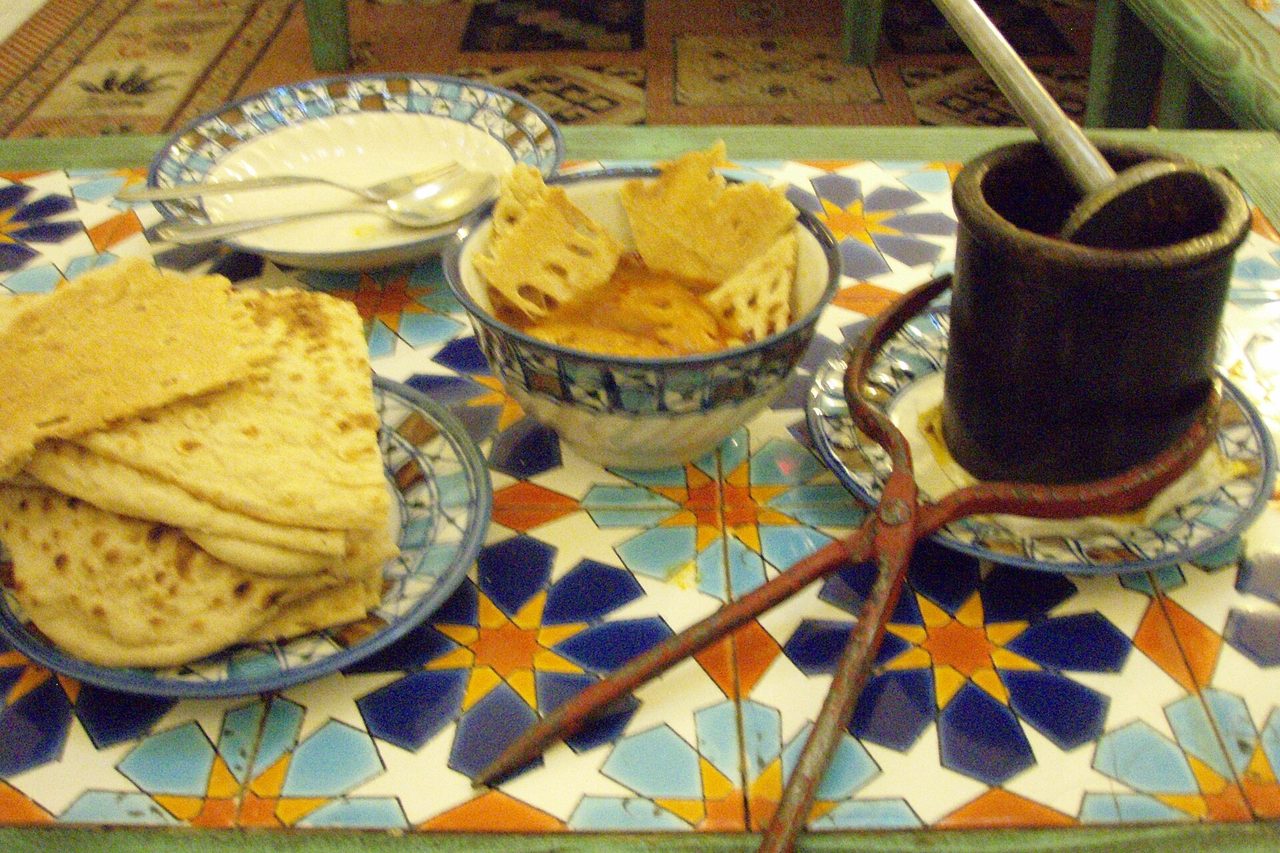
Serve the broth first, with the bread torn into it. The kufteh follow on a separate plate, cut in half so the filling shows.
Variations
- Changing the filling. Prunes instead of apricots, more fried onion, barberries for sourness. What they share is that each is already cooked or needs no cooking.
- Barberries in the broth. A handful of dried barberries in the broth as it reduces adds a sharp edge.
- Smaller. Short of time, divide the mixture into eight, fill with walnuts and apricot only, and simmer 40 minutes.
More detail and the reasons why (1)
- With a bird inside. Some versions wrap the meat round a small stuffed bird and stew it whole, which makes the ball larger still — the Azerbaijani one is known for a diameter of some 20 centimetres.
Tips
- Do not touch it for the first 15 minutes. Before the outside sets, a ball this big can split under its own weight. The broth should barely move, not bubble.
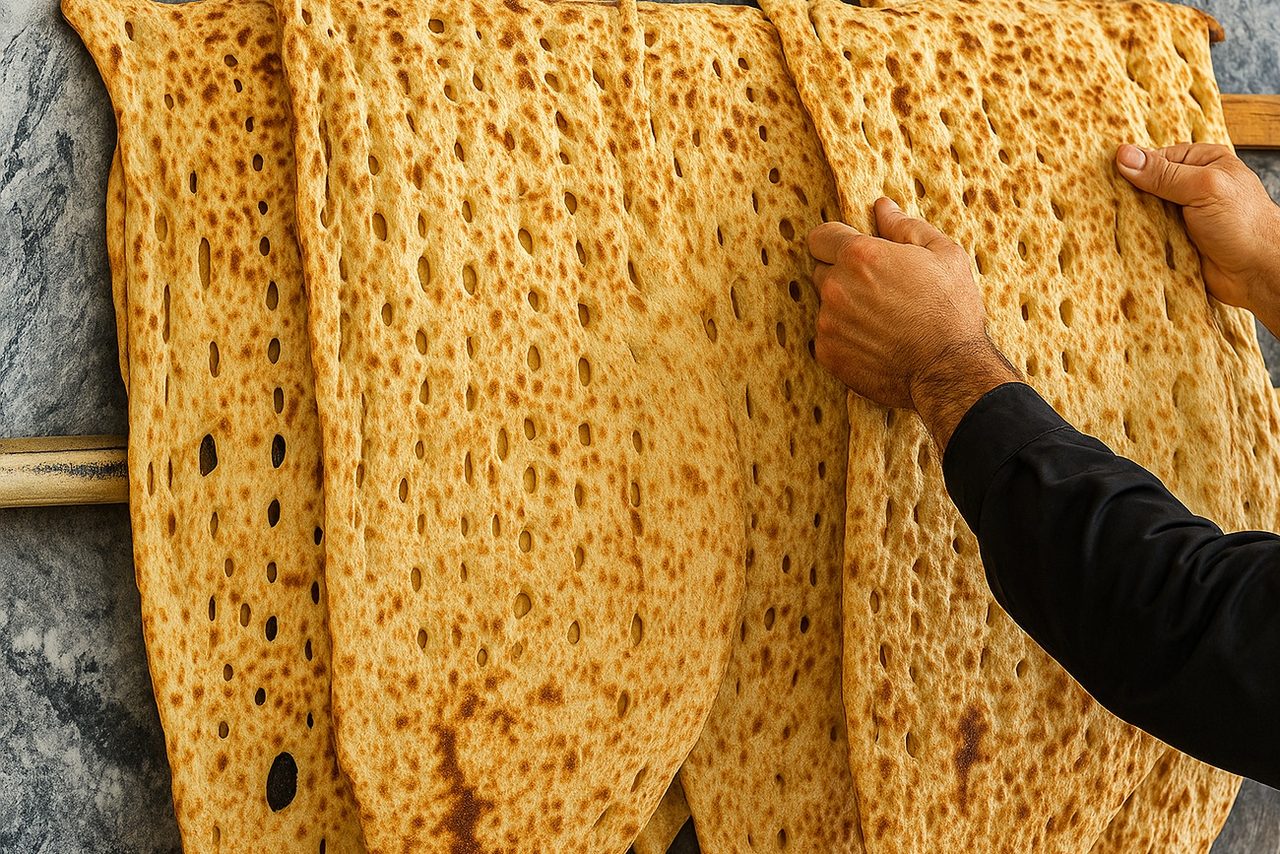
- The broth is the first course. Traditionally the cooking broth is served first, with sangak or lavash torn into it, and the kufteh after. One pot, two plates.
More detail and the reasons why (4)
- The name is the kneading. Kufteh comes from the Persian kuftan, "to beat" or "to grind". Spaghetti and meatballs is the dish that avoids the working: "the salt dissolves the myosin and the working links it into a network, which is the first step of making a sausage." It replaces that network with a panade. A ball larger than a fist that has to hold together for an hour in broth needs the network, so the salt goes in first and the meat is worked on its own for a long time.
- Only cooked things go inside. Boiled egg, fried onion, walnuts, dried fruit. The only thing the pot has to cook is the outer layer of meat, and the temperature in the middle of that layer tells you when it has.
- Grate the onion and squeeze it. As wrapping and sealing puts it, "A dumpling bursts because of water in the filling". Here the meat is the wrapper, so water in the mixture becomes a crack.
- The rice and split peas go in cooked. Iraqi dolma puts raw rice into vegetables and leaves room for it — "The rice doubles; a full shell splits." A ball whose shell is the meat has no such room, so the grains go in having already done their swelling.
The basics behind this dish
- Browning and the Maillard ReactionMeat fails to brown for one of three reasons: it is wet, the pan is cool, or you put too much in at once. Plus how the brown film stuck to the pan becomes your sauce.
- Cooking Meat: Temperature, Resting, and Cutting Against the GrainDoneness is a core temperature, not a number of minutes. What resting actually does, how to handle a thick cut, and why the direction you slice changes the texture.
- Knife Skills: Grip, Cuts, and Why Size MattersHow you hold the knife matters more than how fast you cut. The pinch grip, the claw hand, and why uniform size is a cooking decision rather than a cosmetic one.
More of the same kind


More from this country


Sign in to edit.
Written with AI · how we check it · Edit history
https://cookiki.com/en/r/kufteh-tabrizi · cookiki · User contributions are licensed under CC BY-SA 4.0.