
Photo: Aaaatu · CC BY-SA 4.0
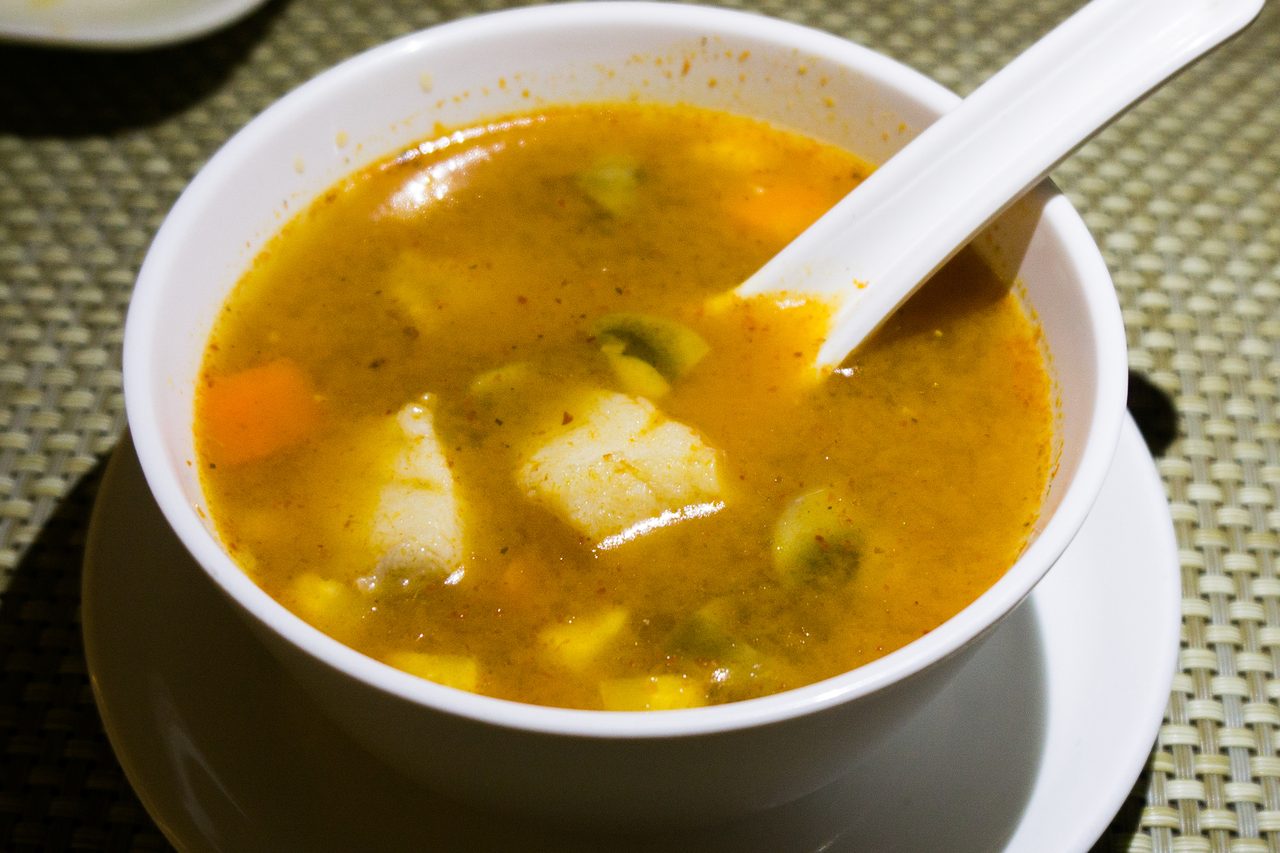
Leng Saep (Spicy Sour Pork Spine Soup)
Thai pork backbone simmered until it falls off the bone, then dressed hot and sour with lime, fish sauce and chilli. It arrives looking like a soup but it is built like a salad — laap or som tam rather than a broth. The bones are cooked long over heat; the seasoning goes in only after the pot comes off it, because boiled lime juice loses its perfume and turns bitter.
Ingredients
- For the simmer (serves 3-4)
- pork neck bones · backbone; soak 30 minutes in cold water to draw the blood out1 kg
- water2 L
- lemongrass · bruised and halved2 stalks
- galangal · ginger is a substitute but a different smell5 slices
- garlic · crushed, skins on6 cloves
- shallots · halved3
- salt1 tsp
- Dressing (added off the heat)
- fish sauce4 tbsp
- lime juice · about 3 limes, squeezed fresh4 tbsp
- Thai roasted chilli flakes · dried chillies toasted and pounded2 tsp
- bird's eye chillies · crushed, to taste5
- khao khua (toasted rice powder) · it carries both the smell and the body of this dish2 tbsp
- sugar · to take the edge off the acid1 tsp
- To finish
- sawtooth coriander · or ordinary coriander1 handful
- spring onions · cut into 3cm lengths3
- mint leaves1 handful
- kaffir lime leaves · shredded fine4
Steps
- ⏲ 30 min
Soak the bones in cold water 30 minutes, changing the water once or twice. Skipped, the broth goes cloudy and keeps a muddy smell — and this is a dish where the broth is meant to be clear, so it shows.
Put the bones and 2L of water in a pot over high heat. As it comes to the boil, skim the scum diligently. Almost all of it rises in the first ten minutes, so do not walk away then.
- ⏲ 90 min
Add the lemongrass, galangal, garlic, shallots and salt, and simmer part-covered for 1 hour 30 minutes. It is ready when a chopstick pushes the meat off the bone. Top up with hot water as it reduces.
- ⏲ 10 min
Make the khao khua. Toast 3 tablespoons of glutinous rice in a dry pan over medium-low, stirring, for 10 minutes — from pale to a deep tan. Cool it and pound or grind it coarse. That smell is what makes leng saep and laap what they are.
In a large bowl mix the fish sauce, lime juice, chilli flakes, crushed bird’s eye chillies and sugar. Add a ladle of the hot broth to dissolve it, then taste. Salty, sour, hot and faintly sweet should all be there. Get it right here and there is nothing to fix later.
Turn off the heat. Lift the bones into the bowl of dressing and pour over enough broth to half-submerge them. Never boiling the dressing is the rule of this dish — heated lime juice loses its perfume and leaves only bitterness.
Scatter in the khao khua and stir. The broth thickens slightly and the toasted-rice smell comes up. Taste again and adjust with a little more lime or fish sauce.
Add the sawtooth coriander, spring onion, mint and shredded lime leaf and turn it over once. Herbs collapse in heat, so they go in at the last second. Serve hot.
Tips & Variations
Variations
- Tom saep (ต้มแซ่บ): the same dressing with beef offal or ribs instead of pork spine. It is the commoner form in Isan, and leng saep is the name for the pork-backbone version of it.
- More of a soup: pour in the broth generously instead of just enough to half-cover, and it becomes something closer to tom yum. Leave the khao khua out if you do — it clouds a thin broth.
- Its relation to laap: laap is built on exactly this dressing — fish sauce, lime, chilli flakes, khao khua, and fresh herbs at the end. Laap puts that dressing on minced meat, leng saep puts it on meat still attached to bone.
- How it differs from gamjatang: almost the same raw material — pork backbone simmered a long time. What differs is when and in which direction it is seasoned. Gamjatang cooks doenjang and perilla into the pot and goes savoury; leng saep is dressed sour and hot with lime and fish sauce after the heat is off.
- With rice: sticky rice (khao niao) balled in the hand and dipped in the broth is the Isan way. It is also served alongside fried rice such as khao pad.
- In Korea: it arrived through Bangkok-style restaurants in Seoul in the 2020s and kept its Thai name. Pulling meat off a spine with your hands is already familiar there from gamjatang, which is part of why it landed easily.
- On the side: raw cucumber, cabbage and long beans to take the edge off the heat. With som tam beside it you have an Isan table.
Tips
- The dressing goes in off the heat. This is the one thing that matters most here. Boiled, the volatile compounds that make lime juice smell like lime are gone and only the bitterness stays, and long-cooked fish sauce reads as flat salt. The broth is a tool for cooking the bones; the flavour is applied at the end (balancing flavour).
- Toast the khao khua yourself. Ten minutes of glutinous rice in a dry pan, then pound it. Shop-bought has lost most of its smell, and here khao khua is both an aroma and the thing that gives the broth body, so there is no substituting it. Take it to a deep tan; black is bitter (blooming spices).
- Soak the blood out and skim. Those two decide how clear the broth is: thirty minutes in cold water, then the first ten minutes of the boil. With so little broth in the bowl, cloudiness shows immediately (stocks and broth).
- Neck bones beat lower spine. More meat on them and more cartilage, which turns to gelatine over a long simmer and gives the broth some cling (braising, collagen and time).
- Galangal is not ginger. Galangal is piney and citrussy; ginger is hot and sweet. Substitute if you must, but use less of it and add a little more lemongrass to point it back in the right direction.
- Balance the four tastes in the bowl first. Poured straight into the pot there is no room to adjust. Build salty, sour, hot and faintly sweet in the bowl, then add the bones and broth — the usual order of operations in Thai cooking.
- The sugar is not there to sweeten. A teaspoon is enough, and its job is to round the corners off the acid and the salt. If you can taste sweetness you have already used too much (what sugar does).
- Use toasted chilli flakes. Thai phrik pon is dried chilli toasted in a pan and pounded, which smells quite different from untoasted flakes. If you are using Korean gochugaru, toast it briefly in a dry pan first (chilli and heat, gochugaru).
- Herbs in the last ten seconds. Sawtooth coriander and mint collapse the moment they meet hot broth. Add them just before it goes into the bowl and turn it once (fresh herbs, coriander).
- It is eaten with your hands. Meat on a spine does not come off with chopsticks. Picking the pieces up and pulling is the correct method, and the marrow is sucked out of the bone.
- Dress it again the next day. The bones and broth keep two days in the fridge; add fresh lime juice and fresh herbs when you reheat, because the acid and the aroma are the first things to go overnight (reviving leftovers).
The basics behind this dish
- Chilli and Heat: Where It Lives and How to Take It BackHeat is not a taste but a pain signal. Where capsaicin actually sits, why water does nothing, and the four ways to pull a dish back once it has gone too far.
- Stocks and Broths: Clarity, Time, and Why You Do Not Salt ThemWhat separates a clear stock from a cloudy one is temperature, not ingredients. Why you start in cold water, how long each ingredient wants, and why salt comes later.
- Salt: When You Add It Matters More Than How MuchThe same amount of salt either draws water out or seasons all the way through, depending on when it goes in. Osmosis, seasoning in layers, and why salt types are not interchangeable by volume.
More of the same kind


More from this country


Sign in to edit.
AI-drafted, editor-reviewed · edits: 0 ·Edit history
https://cookiki.com/en/r/leng-saep · cookiki · User contributions are licensed under CC BY-SA 4.0.