
Mie Goreng (Fried Noodles)
Indonesia's national noodle dish: boiled yellow noodles thrown into a hot wok with a ground spice paste and sweet soy. The same seasoning over rice is nasi goreng — but noodles, unlike rice, go on drinking the sauce. Undercooking them, oiling them and keeping the time in the wok short is the whole trick, and it is the only one.
Ingredients
- Noodles (serves 2)
- fresh egg noodles · yellow wheat noodles; instant noodle cakes work400 g
- oil · tossed through the drained noodles1 tbsp
- Bumbu (spice paste)
- shallots · or half an onion5
- garlic4 cloves
- red chillies · deseed them for a milder version3
- candlenuts · kemiri; macadamia or cashew substitute3
- shrimp paste · terasi; leave it out if you have none0.5 tsp
- Seasoning
- kecap manis · sweet soy sauce; this is the colour and the flavour3 tbsp
- soy sauce1 tbsp
- oyster sauce · optional1 tbsp
- white pepper0.25 tsp
- To add and to finish
- chicken breast · sliced thin; prawns also work150 g
- eggs · one into the wok, one fried for the top2
- cabbage · shredded coarsely2 leaves
- spring onions · cut into 3cm lengths2
- fried shallots · bawang goreng, scattered at the end2 tbsp
- prawn crackers · kerupuk, served alongside4
- cucumber · sliced0.5
Steps
Boil the noodles one minute less than the packet says. Rinse them under cold water to wash off the starch, shake them dry and toss with a tablespoon of oil. Counting on the noodles continuing to cook in the wok is the whole of this recipe — noodles boiled to time come out of the wok soft, every time.
Pound or blend the shallots, garlic, chillies, candlenuts and shrimp paste to a smooth paste, with no water. This is the bumbu, and it is what Indonesian cooking is built on.
- ⏲ 5 min
Fry the bumbu in 2 tablespoons of oil over medium heat for 5 minutes — until the oil runs clear at the edges and the smell changes sharply. That is the moment the raw spice taste leaves. Stop before it and nothing later will fix it.
- ⏲ 2 min
Turn the heat to high, add the chicken and stir-fry 2 minutes until cooked. Push it to one side, crack in one egg, scramble it in the clear space with chopsticks, then mix everything together.
- ⏲ 1 min
Add the cabbage and spring onion and fry 1 minute. Move on while they are still crisp — once the noodles go in there is no time left.
- ⏲ 2 min
Add the oiled noodles, then pour the kecap manis, soy, oyster sauce and pepper down the side of the wok rather than over the noodles. Hitting hot steel they caramelise for an instant and the smell comes alive. Lift and fold with tongs for 2 minutes — turn them over, do not stir.
It is done when every strand is evenly coloured and no liquid is left in the base of the wok. Visible sauce means it is not finished; plated like that, the noodles drink it and go soft.
Plate it, top with the fried egg and scatter the fried shallots. Serve immediately with prawn crackers and cucumber — even a few minutes standing softens the noodles.
Tips & Variations
Variations
- How it differs from nasi goreng: the seasoning is essentially the same and only the base changes — but that changes the method. Rice goes in already dry, usually a day old; noodles keep taking up water after boiling, so they have to be undercooked and oiled first. Indonesian stalls sell both side by side, usually from the same bumbu.
- Mie Aceh: the Sumatran version, with curry spices, redder and thicker, sometimes left slightly soupy. It uses fat noodles and often crab or mutton.
- Javanese mie goreng: more kecap manis, so much sweeter and darker, fried one plate at a time over a charcoal brazier at a street stall.
- Instant mi goreng: the packet noodle that took the name around the world is named after this dish, which is why using instant noodle cakes at home is not the odd choice it sounds.
- Malaysian and Singaporean mee goreng: sold under the same name but with stronger Chinese influence — more oyster sauce and soy, less kecap manis. It shares a table with laksa and roti canai.
- The other fried noodles: pad thai leans on tamarind for sourness, pad see ew on soy and wide noodles, chow mein on oil and wok heat, yakisoba on a Worcestershire-style sauce. Mie goreng's territory is sweetness.
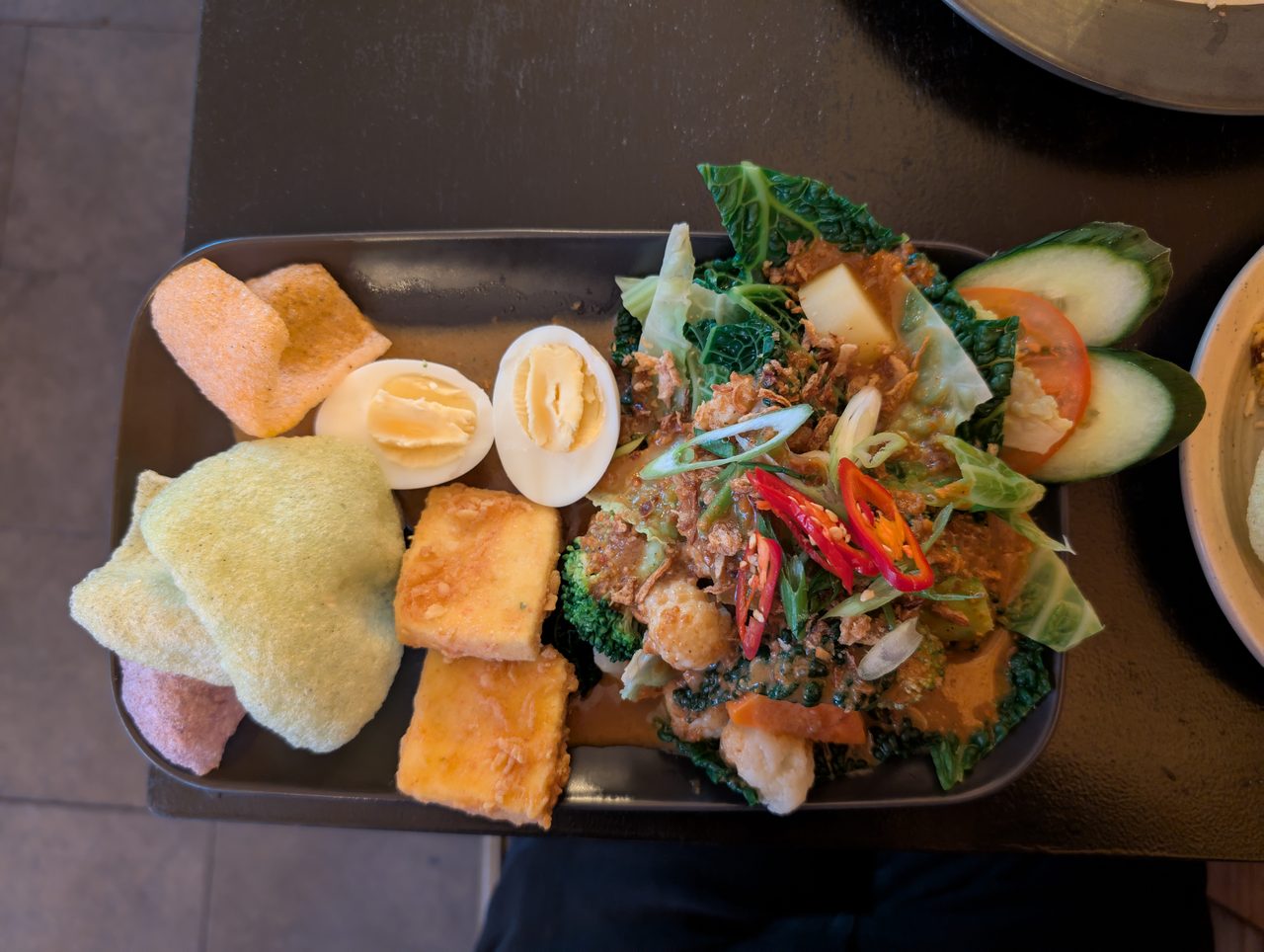
- What comes with it: prawn crackers and cucumber almost always, and a few skewers of satay makes it a street-stall meal. It also sits well beside gado-gado.
Tips
- Boil the noodles a minute short. They get two more minutes in the wok and keep softening on the plate as they absorb sauce. Cooked to time, they are already past it by the time you eat (cooking noodles).
- Rinse them, then oil them. Cold water washes off the surface starch so they do not weld together in the wok, and oil films each strand so the sauce coats evenly. Skip both and you get one lump.
- Fry the bumbu until the oil separates. Blended spices stirred straight in leave a raw edge. The signal is the water cooking off and clear oil starting to run at the sides, and nearly every Indonesian stir-fry passes through this step (blooming spices).
- Candlenuts are there for body. Kemiri contribute texture more than flavour; ground, they thicken the paste so it clings to the noodles. Macadamia or cashew does the same job. Do not eat them raw — they always get cooked.
- Kecap manis is the identity of the dish. Indonesian soy sauce thickened with palm sugar, it supplies the colour and the sweetness at once. Without it, three parts soy dissolved with two of dark brown sugar substitutes, though never as thickly (soy sauce, what sugar does).
- Pour the sauce down the side of the wok. Over the noodles it just wets them; on hot steel it caramelises for a second and the smell changes. This is common to all wok noodles (heat control).
- Do not fill the wok. Two portions at a time. Overloaded, the temperature drops, it steams instead of frying, and water from the noodles pools in the base.
- Fold, do not stir. Lift from underneath with tongs and turn them over. A spatula breaks the strands, and broken noodles take up more sauce and turn to porridge.
- Liquid in the wok means it is not finished. The base should be dry and every strand evenly coloured. Plated wet, the noodles absorb the rest on the plate.
- Be generous with the fried shallots. Bawang goreng is not a garnish; it is the last layer of aroma. Shop-bought is fine, and home-fried wants thin slices taken slowly at a low temperature (deep-frying).
- Keep the fried egg soft. Breaking the yolk into the noodles is the Indonesian way to eat it, and a hard yolk has no part to play (cooking eggs).
- Serve it at once. Five minutes after the wok it is a different dish. Reheat leftovers with a splash of water over high heat, briefly (reviving leftovers).
The basics behind this dish
- Cooking Noodles: Salt, Starch, and Whether to RinseWhy the water is salted, why oil in it is a mistake, and the actual rule for which noodles get rinsed and which never do.
- Dough and Gluten: When to Build It and When to Avoid ItThe same flour and water becomes a dumpling wrapper or a tender pancake. The difference is whether you built gluten or avoided it — and kneading and resting do different jobs.
- Why Sauces Split: Emulsions and Pan SaucesA cream sauce breaking and a carbonara scrambling are the same failure. Temperature and emulsifiers — plus how to bring a split sauce back.
More of the same kind


More from this country



Sign in to edit.
AI-drafted, editor-reviewed · edits: 0 ·Edit history
https://cookiki.com/en/r/mie-goreng · cookiki · User contributions are licensed under CC BY-SA 4.0.