
Photo: AlejandroLinaresGarcia · CC BY-SA 4.0
Pozole Rojo (Hominy and Pork Stew)
The Mexican celebration stew: corn simmered until each kernel bursts open like a flower, in a pork broth stained deep red with ground dried chillies. The heart of it is not the chilli but what is done to the corn. Nixtamalisation, cooking it in an alkaline solution and slipping off the skins, is what lets the kernel flower; corn that skips it stays a hard bead however long you boil it.
Ingredients
- Nixtamal (if making it yourself)
- dried field corn · a large-kernelled type such as cacahuazintle; sweetcorn will not work500 g
- food-grade calcium hydroxide · 1% of the corn weight; food-grade cal or pickling lime only, never the builders kind5 g
- water2.5 L
- Broth
- pork shoulder · cut into large 4-5cm pieces800 g
- pork neck bones or trotter · for body in the broth400 g
- onion · halved1
- garlic8 cloves
- bay leaves2
- water3 L
- salt · added in stages at the end1 tbsp
- Chilli sauce
- guajillo chillies · colour and aroma; barely hot8
- ancho chillies · sweetness and depth3
- chiles de arbol · optional; this is the heat2
- garlic3 cloves
- Mexican oregano · or ordinary oregano1 tsp
- ground cumin0.5 tsp
- lard or oil2 tbsp
- Garnishes (everyone dresses their own)
- cabbage · shredded very fine0.25 head
- radishes · sliced thin6
- onion · finely chopped1
- limes · in wedges3
- dried oregano2 tsp
- ground chilli · chile piquin in Mexico2 tsp
- tostadas · or toasted tortillas6
Steps
Rinse the dried corn, put it in a pot and add 2.5L of water. Slake the 5g of cal in a cup of water, let the grit settle, and pour in only the liquid above it. The water turning slippery and yellow means it is working.
- ⏲ 15 min
Bring to the boil, cook 15 minutes, then take it off the heat, cover, and leave it at least 8 hours or overnight. This is when the alkali dissolves the pericarp off the kernels. The steeping, not the boiling, is the substance of nixtamalisation.
Tip the corn into a colander and rinse repeatedly, rubbing it between your hands, until the water runs clear and the slippery feel is gone. Pick the hard germ tip (the cabecita) off each kernel with a thumbnail — left on, the kernel will not open.
- ⏲ 120 min
Cover the cleaned corn with fresh water and simmer, part-covered, about 2 hours. It is ready when the kernels have roughly doubled and split open like flowers — what Mexican cooks call florear. If they are still chalky inside, add water and keep going. No salt yet.
- ⏲ 90 min
In another pot, cover the pork, bones, halved onion, 8 cloves of garlic and bay with 3L of water and bring to the boil. Skim off the scum that rises, turn it down and simmer an hour and a half. When the meat pulls apart with a fork, lift it out and shred it along the grain.
- ⏲ 30 sec
Stem and split the guajillos and anchos and shake out the seeds. Warm them in a dry pan 30 seconds a side, no more — just until the smell lifts. Scorched, they turn the whole pot bitter and nothing takes it back.
- ⏲ 20 min
Cover the warmed chillies with hot water and soak 20 minutes. When they are soft to the squeeze, lift them into a blender with the 3 cloves of garlic, the oregano, the cumin and a ladle of the soaking water, and blend smooth.
Push the purée through a sieve — this is not optional. Guajillo skins never break down completely and stay in the broth as gritty threads. Press it through with the back of a ladle and throw away what stays behind.
- ⏲ 5 min
Heat the lard in a deep pot and pour in the strained sauce all at once. It spits, so shield it with a lid, then fry over medium heat 5 minutes, stirring, until it darkens and thickens. Skip this and the raw chilli taste never leaves.
- ⏲ 30 min
Add the pork broth to the fried sauce, then the cooked corn and the shredded meat. Simmer 30 minutes to bring it together, salting now. The corn goes on drinking the broth, so stop just short of where it tastes right.
Ladle out the stew and put the cabbage, radish, onion, oregano, ground chilli and lime on the table separately. Dressing your own bowl is the form of the dish — garnished in the kitchen, the vegetables wilt and lose the crunch that is their whole job. Serve tostadas alongside.
Tips & Variations
Variations
- Pozole blanco: no chilli sauce at all, just the clear pork broth. It is the commonest form in Guerrero, with heat added at the table from salsa. With only corn and broth left there is nowhere for a badly made stock to hide.
- Pozole verde: tomatillos, jalapeños, coriander and pumpkin seeds blended in place of the red chillies, in the Guerrero style, with the ground seeds thickening the broth. It is not a colour variant so much as a different dish.
- With chicken: chicken thighs and breast in place of pork halve the time and lighten the broth. It is the commonest way to make it outside Mexico, and the photograph on this page is closer to the chicken version than the pork one.
- From tinned hominy: buying the corn already nixtamalised (hominy, maíz pozolero) turns two days into two hours. The kernels are already open, so they only need the last 30 minutes in the broth. It will not taste as much of corn as freshly cooked nixtamal does.
- Head and trotter: traditionally pig's head and shin go into the pot for gelatine, until the broth sticks to your lips. It is the same reason bones go into suyuk and gamjatang.
- Where it sits among soups: like seolleongtang or samgyetang it is a broth that is a whole meal, and it shares with yukgaejang even the structure of building a chilli paste separately and pouring it in. Chili con carne uses the same dried chillies but is a thick stew rather than a broth.
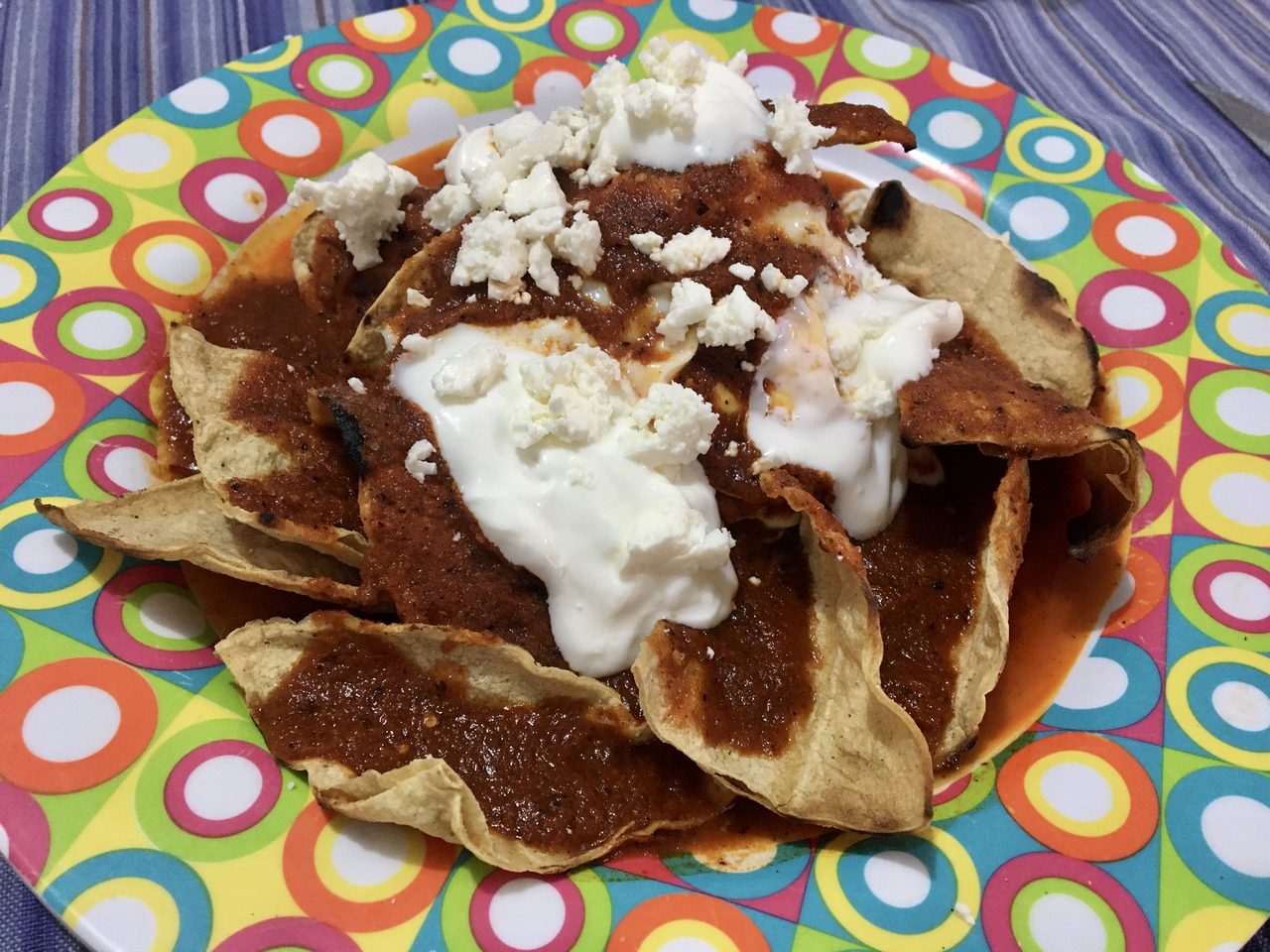
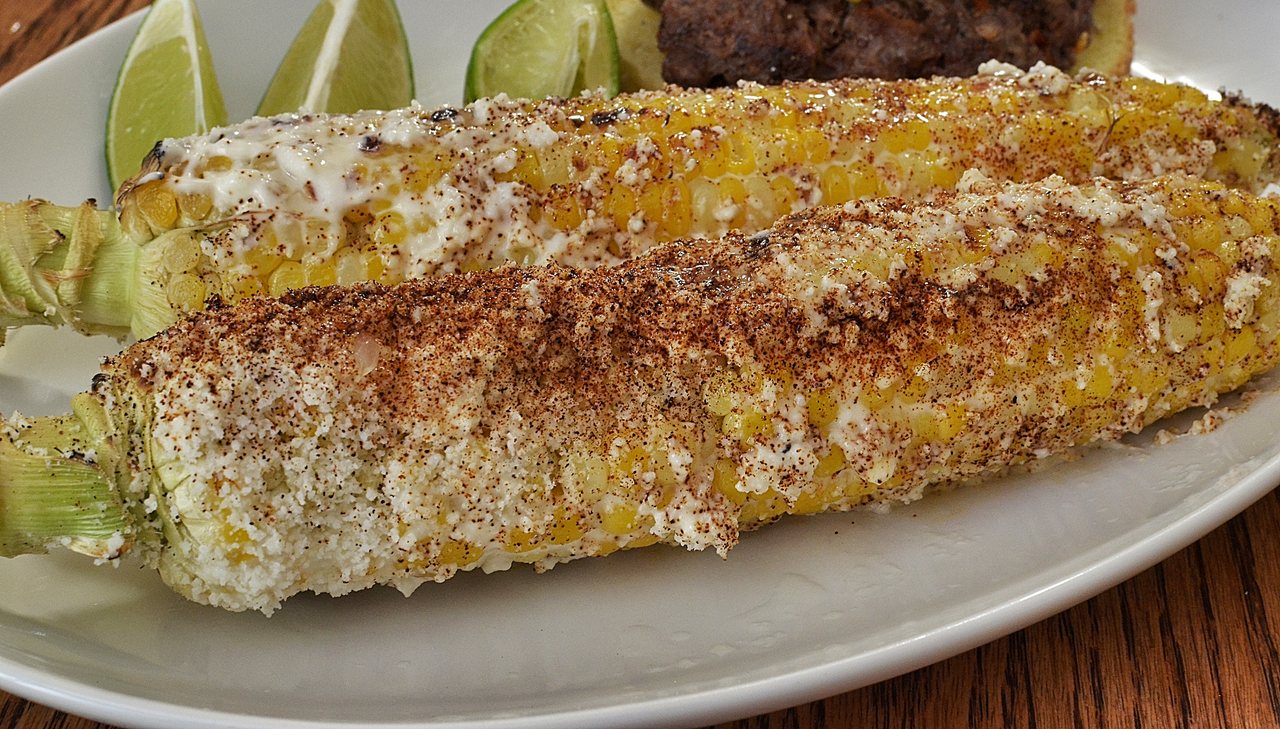
- The same corn, other dishes: elote grills the cob whole, while chilaquiles and nachos are built on tortillas made from nixtamalised corn. So are the tortillas under tacos al pastor, beef tacos and enchiladas.
- When it is eaten: on the eve of Independence Day on 16 September, at Christmas, at birthdays and weddings, in a pot big enough for everyone. Mexico has pozolerías that open only on Thursdays and Saturdays — it is food for the day people gather, not everyday food.
Tips
- Nixtamalisation is the whole dish. The alkali dissolves hemicellulose in the hull so the skin slips off and the kernel can take up water and open. It also frees the niacin that is otherwise locked in the corn — the proof being the pellagra that appeared wherever corn was adopted as a staple without the process. It is over three thousand years old and there is still no substitute.
- Food-grade cal only. Food-grade calcium hydroxide, sold as cal or pickling lime. Builders' lime carries impurities and is not edible. One per cent of the corn's weight is the benchmark; more than that tastes bitter and soapy.
- Removing the germ tip is what decides whether it opens. The hard cabecita at the pointed end has to come off so water can get in and split the kernel like a flower. It is fiddly and easy to skip, and skipping it leaves you with merely swollen corn however much longer you boil it.
- Cook the corn through before salting anything. Salting the water early does slow the kernel opening, but not for the reason usually given: soaking shows that salt softens the skins of dried beans rather than firming them, so "the same as dried beans" will not do as an explanation. A concentrated salt solution holds water back from the starch and raises its gelatinisation temperature, and it is water getting in past the germ tip that splits the kernel. So seasoning waits for the last thirty minutes (salt and seasoning).
- Dried chillies are warmed, not toasted. Thirty seconds in a dry pan is enough to lift the smell. By the time they darken it is already too late, and one scorched chilli makes the whole pot bitter (chilli and heat, blooming spices).
- Do not skip the sieve. A domestic blender never fully breaks down guajillo skins, and this one step is the difference between a smooth broth and a gritty one.
- Frying the sauce changes it. Blended chilli is still raw. In hot lard the water cooks off, the colour deepens and the sweetness comes up. Frying a salsa before it goes into the pot is the standard order of operations across Mexican cooking (browning and Maillard).
- All the scum rises in the first ten minutes. Not skimmed then, it clouds the broth and leaves a muddy taste. The trick is simply not walking away as it comes to the boil (stocks and broth).
- Shoulder needs bones with it. Lean meat alone gives no body. Neck bones or a trotter turn collagen into gelatine, and that is what makes the broth cling (braising, collagen and time).
- The garnishes go on the table, not in the pot. Cabbage and radish start wilting the instant they meet hot broth. Added at the last second by each person, crisp and hot arrive on the same spoon (serving temperature).
- The lime is not a decoration. Acid cuts the pork fat and the sweetness of the corn; without it the bowl becomes cloying after a few spoonfuls (balancing flavour, lemon).
- Crush the oregano in your palm. Dried oregano needs rubbing to wake up. Mexican oregano is a different plant from the Mediterranean one and much more citrussy; without it, ordinary oregano plus a little grated lime zest points in the same direction (fresh herbs).
- It is better the next day. The corn takes up the broth and the chilli settles. It also keeps drinking, so reheating wants a splash of water or stock (reviving leftovers).
The basics behind this dish
- Balancing Flavour: Salt, Acid, Sweet, Fat, HeatWhen something tastes like it is missing something, it is usually salt or acid. Five dials, the order to turn them, and how to taste properly.
- Chilli and Heat: Where It Lives and How to Take It BackHeat is not a taste but a pain signal. Where capsaicin actually sits, why water does nothing, and the four ways to pull a dish back once it has gone too far.
- What Sugar Does Besides SweetenCutting the sugar does not just cut sweetness. Colour, moisture, structure, and the counterweight to salt and acid — which is why savoury dishes call for it too.
More of the same kind


More from this country


Sign in to edit.
AI-drafted, editor-reviewed · edits: 0 ·Edit history
https://cookiki.com/en/r/pozole · cookiki · User contributions are licensed under CC BY-SA 4.0.