
Baekseolgi (Steamed White Rice Cake)
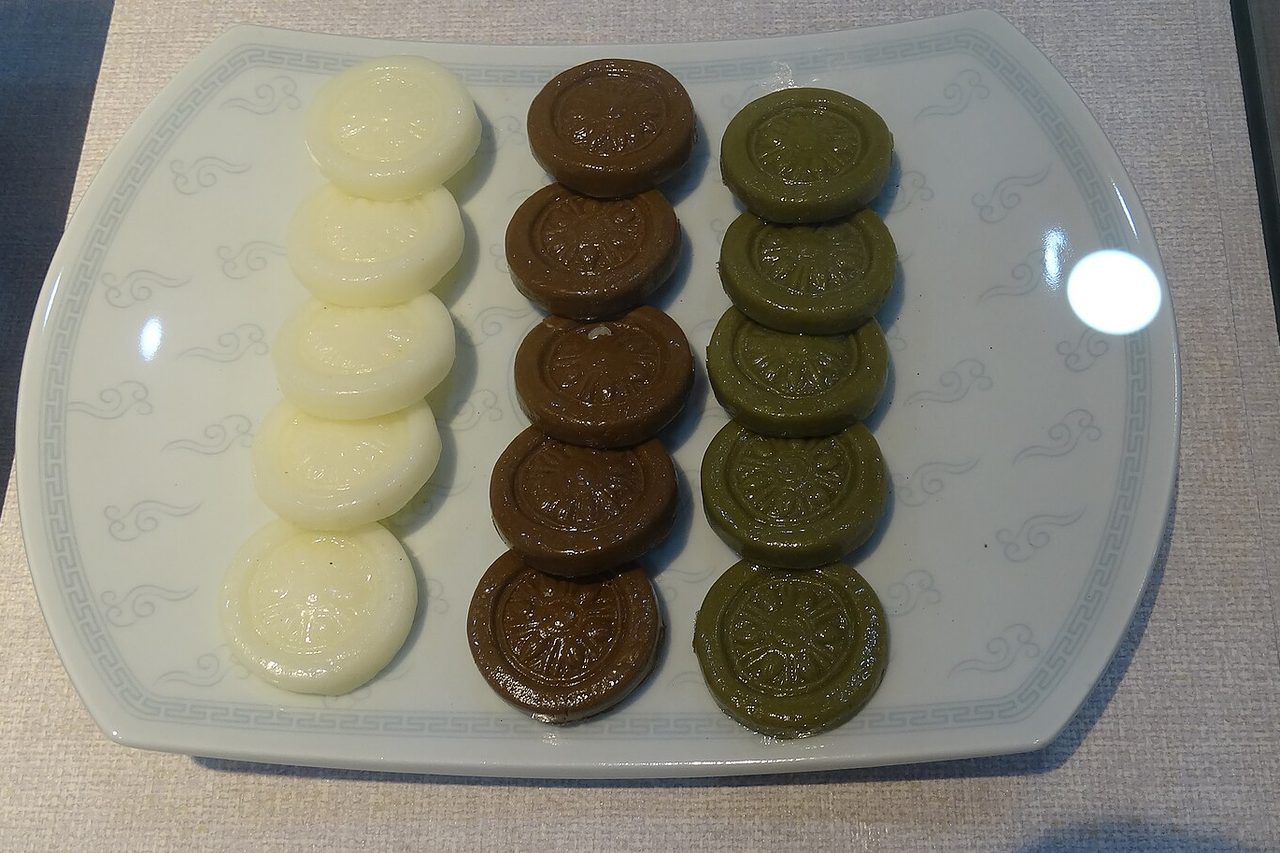
The plain white steamed rice cake made for a baby’s twenty-first day and hundredth day, and the whole of it is that there is no dough. Nothing is kneaded and nothing binds it. Moistened rice flour is rubbed through a sieve twice, piled into a mould and steamed, and the steam gelatinises the starch where it lies so that the particles weld wherever they touch. Songpyeon kneads a boiling-water dough and daifuku beats one; baekseolgi gets all of its cohesion from steam. Which is why sieving is not about removing lumps — it is how the water is distributed.
Ingredients
- For one 20cm cake
- wet-milled short-grain rice flour · the kind milled damp and salted at a rice mill is much the easiest500 g
- water · it varies a great deal with the flour; adjust by the test below70 ml
- sugar · stirred in at the very end50 g
- salt · leave it out if the flour is already salted1 tsp
- For the steamer
- damp cloth1
- dry cloth · to wrap the lid1
- Variations
- raisins or jujube50 g
- dried mugwort powder10 g
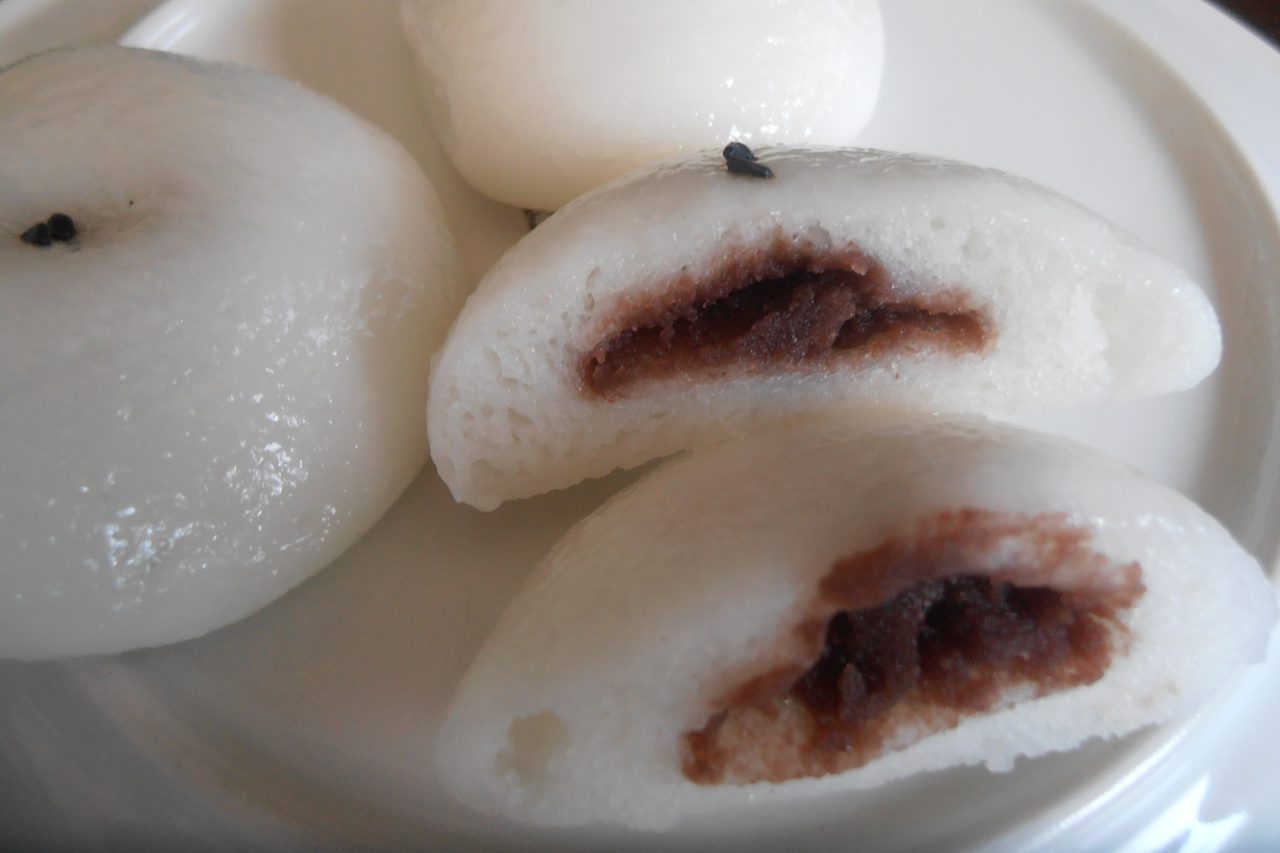
- cooked red beans · layered, it becomes pat-sirutteok300 g
Steps
- ⏲ 10 min
Mix the salt into the flour and add the water a sprinkle at a time, rubbing it through with your palms. Poured in at once it only wets the patch it lands on.
- ⏲ 5 min
Squeeze a handful. The lump should hold its shape and then crumble at a flick of a finger. Crumbling straight away means another tablespoon of water; sticking to your hand means more flour. This hydration is the whole recipe.
- ⏲ 10 min
Rub it through a sieve twice. This is not about catching lumps — it is how the water is spread out. A lump is a locally wet spot, and steamed it turns into a translucent, chewy patch instead of cake.
- ⏲ 2 min
Stir the sugar in last. Sugar pulls water to itself, so added early it re-wets the flour and undoes the sieving.
- ⏲ 5 min
Line the mould with a damp cloth and spoon the flour in without pressing it. Packed down, the steam has no path through and the middle stays raw. Level only the top, with the back of a knife.
- ⏲ 2 min
Score the portions now, before it is steamed. Once set it tears rather than cuts.
- ⏲ 25 min
Set it over hard-boiling water, wrap the lid in a dry cloth, and steam 25 minutes. Condensation dripping off the lid makes a wet patch that collapses (steaming).
- ⏲ 5 min
Turn the heat off and let it stand 5 minutes. Do not lift the lid before that — the same reason as char siu bao. A skewer should come out with no dry flour on it.
Tips & Variations
Variations
- With beans, raisins or jujube stirred through the layer.
- Ssuk seolgi / pumpkin seolgi: mugwort powder or steamed pumpkin for colour and scent.
- Pat-sirutteok: layers of rice flour alternated with cooked red beans — the archetype for house-moving and ritual cakes.
- Mujigae-tteok: each layer tinted a different colour. Same method throughout.
- Why white: ko.wikipedia notes the cake is white "for purity and sanctity", and that the twenty-first-day baekseolgi is by custom not taken outside the front gate but eaten by the family.
Tips
- There is no dough. Every other rice cake on this site is bound by something — songpyeon kneads a boiling-water dough so that gelatinised starch does the job gluten would, daifuku beats one. Baekseolgi binds nothing. Moistened flour is piled up and the steam gelatinises the starch where it lies, welding the particles wherever they touch. It is the third way to make a rice cake.
- Choosing flour's premise does not even arise. That guide explains structure through protein. Here there is no network to build and no dough to work.
- Sieving is measurement, not cleaning. A lump is not a problem because it is untidy; it is a problem because it is locally wet. It gelatinises first and sets glassy while the flour around it is still dry. The sieve is the tool that spreads the water evenly through 500g of powder.
- Do not pack it down. As steaming says, steam applies no force of its own. The gaps between the particles are its path, so pressed tight the top cooks and the middle stays raw and white.
- Score the portions before steaming. Set, the cake tears instead of cutting. That single step is often the whole difference between a home baekseolgi and the shop's.
- Sugar goes in last. It is hygroscopic, so added early it re-wets the flour — the "moisture retention" that what sugar does lists as a virtue is a nuisance here.
- The next day it is a different food. Non-glutinous rice is high in amylose and stales fast, for the reason daifuku explains: mochi is soft the next morning and baekseolgi is hard by breakfast. Do not refrigerate it — eat it the same day or freeze it.
The basics behind this dish
- Knife Skills: Grip, Cuts, and Why Size MattersHow you hold the knife matters more than how fast you cut. The pinch grip, the claw hand, and why uniform size is a cooking decision rather than a cosmetic one.
- Cooking Rice: Rinsing, Ratios, and RestingHow far you rinse, how much water, and the ten minutes of resting decide the texture. And for fried rice or risotto, the rules invert.
- Steaming: Water Level, Condensation, and StackingSteam never exceeds 100°C and still cooks faster than boiling water. The reason is latent heat; the commonest failure is the drip off the lid; and stacking does not work the way people think.
More of the same kind


More from this country


Sign in to edit.
AI-drafted, editor-reviewed · edits: 0 ·Edit history
https://cookiki.com/en/r/baekseolgi · cookiki · User contributions are licensed under CC BY-SA 4.0.