
Photo: Fareedaaa · CC BY-SA 4.0
Khanom Chin (Fermented Rice Noodles Pressed into Boiling Water)
Thai rice noodles: rice soaked for days until it sours, ground into a dough, and pressed through a perforated plate straight down into boiling water. Every other noodle on this site is rolled and cut, pulled by hand, or bought. This one can only be extruded, because rice has no gluten and so a rice dough cannot be stretched or folded at all. What holds a strand together instead is starch from part of the dough that was cooked first and mixed back in.
Ingredients
- The noodles
- raw long-grain rice · older rice is better; new-crop rice goes to mush when soured1 kg
- water · for the soak, changed daily3 L
- tapioca starch · optional; add it if the strands keep breaking100 g
- salt1 tsp
- Nam ya (fish curry sauce)
- white fish · mackerel or snakehead; poached, picked and mashed500 g
- coconut milk400 ml
- dried chillies · soaked8
- lemongrass2 stalks
- galangal30 g
- krachai · fingerroot; it is what makes nam ya nam ya50 g
- shallots6
- shrimp paste (kapi)1 tbsp
- fish sauce3 tbsp
- To serve
- raw vegetables · bean sprouts, long beans, banana blossom, chaphlu leaves300 g
- boiled eggs · salted ones are better still4
Steps
Wash the rice and soak it for three to four days, changing the water once a day. Without the water changes it does not sour, it rots. It is ready when a grain crushes between your fingers and the smell has gone sour.
- ⏲ 20 min
Drain, rinse it several times, and grind it very fine with a little water. Any grit left in it blocks the press.
- ⏲ 60 min
Put the ground rice in a cloth and press the water out under a weight, until a handful holds its shape.
- ⏲ 20 min
Take a fifth of the dough and boil it for twenty minutes. This is the pivot of the dish: the cooked starch becomes a paste that holds the rest of the dough together in a strand. Rice has no gluten, so there is nothing else to hold it.
- ⏲ 20 min
While it is hot, knead the boiled lump back into the raw dough hard, for twenty minutes, until it is smooth and stretches. Cooled, it will not combine.
- ⏲ 10 min
Bring a large pot of water to a rolling boil, with a bowl of cold water beside it.
- ⏲ 3 min
Load the dough into a perforated noodle press (a potato ricer, or a punched tin, will do) and press it down over the boiling water. The strand sets the moment it touches, as the starch cooks. Thirty seconds more once they float.
- ⏲ 5 min
Lift them out and rinse them in cold water. Left unrinsed, the surface starch glues the strands into one mass (cooking noodles).
- ⏲ 15 min
Gather them a mouthful at a time and coil each into a small nest on a tray. That is how they are sold in Thai markets, and coiled they do not stick to each other.
- ⏲ 40 min
Make the nam ya: pound the chillies, lemongrass, galangal, krachai, shallots and shrimp paste to a paste, fry it in a little coconut milk until it smells cooked, then add the mashed fish and the rest of the coconut milk and simmer. Season with fish sauce.
- ⏲ 5 min
Put the nests on a plate and ladle the nam ya over. Serve the raw vegetables and boiled eggs alongside — sauce hot, noodles at room temperature.
Tips & Variations
Variations
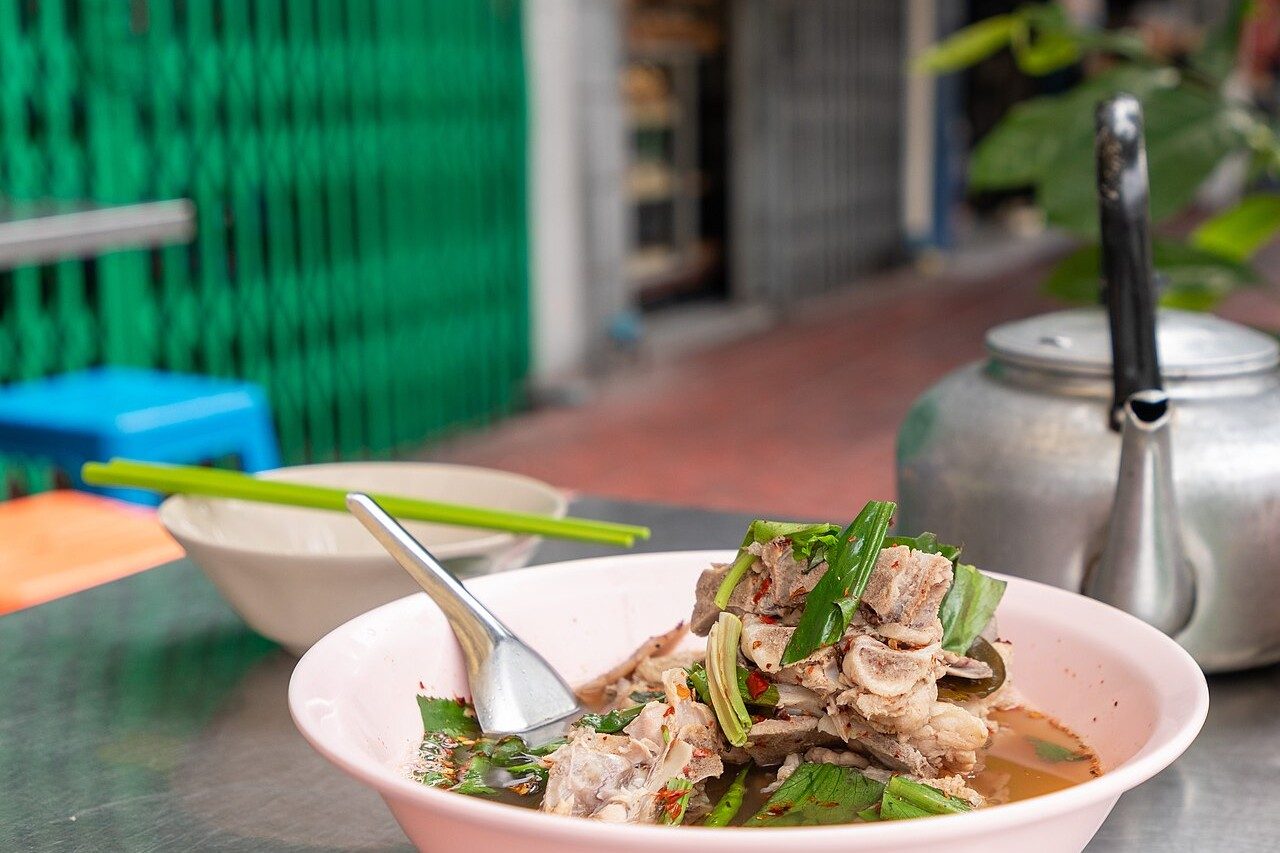
- Nam ya: the fish and krachai curry. The default, and what the photograph shows (nam ya pu, made with crab).
- Nam phrik: a sweet pork, peanut and coconut sauce — the version children ask for.
- Nam ngiao: northern Thailand's tomato and pork-rib broth, hot and sour.
- Sao nam: no sauce at all — pineapple, ginger, coconut and dried shrimp tossed through.
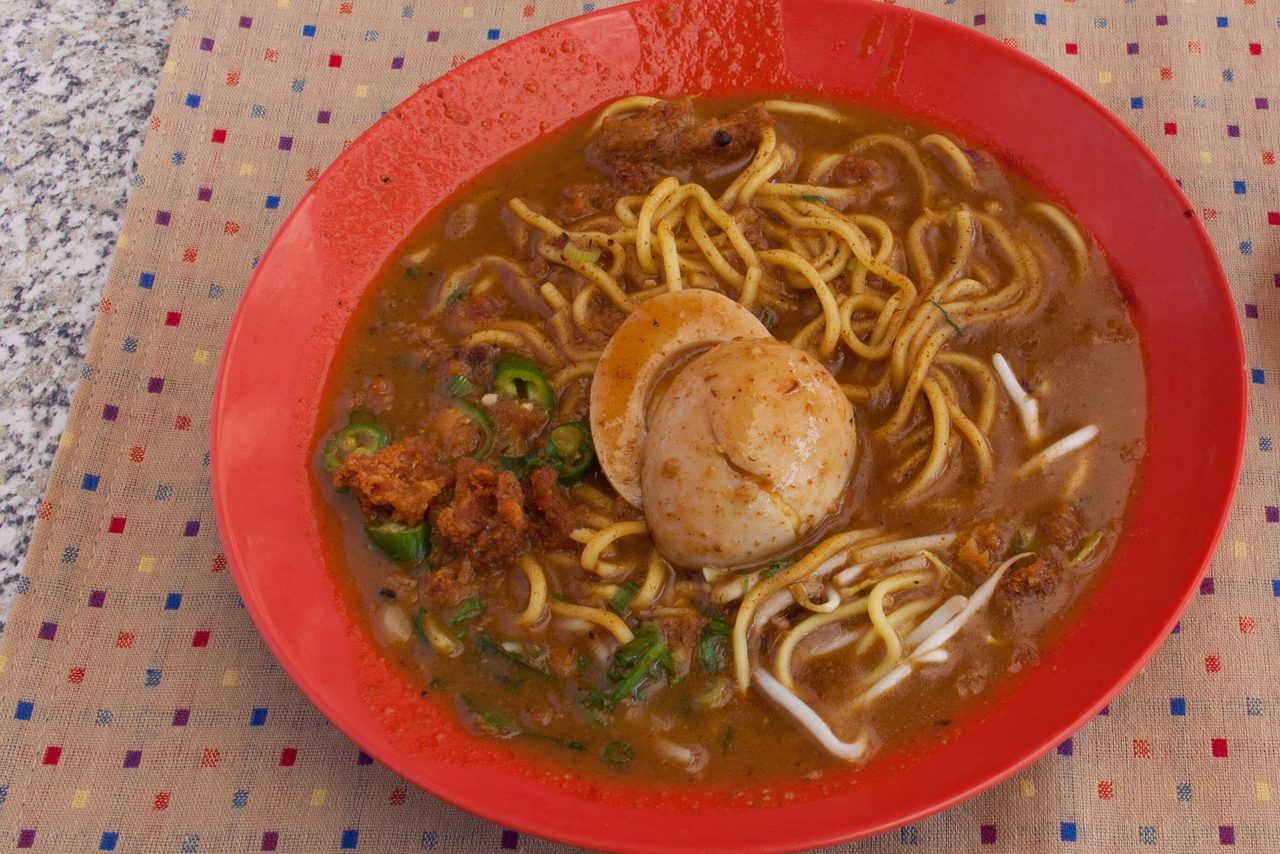
- The name: khanom means a noodle or a sweet and chin means Chinese, but the dish is not Chinese. ko.wikipedia records that it comes from the Mon people who lived in central Thailand before the Thai arrived. Lao khao poon and the noodles in Burmese mohinga are the same family.
Tips
- This noodle can only be extruded. Kalguksu is rolled and cut; Lanzhou lamian is folded and pulled. Both of those need a gluten network, and rice has none — so a rice dough can neither be stretched nor folded, and pushing it through a hole is all that is left.
- Boiling a fifth of the dough first is the pivot. That cooked starch becomes the paste that binds the rest into a strand. Shokupan pre-cooks starch as a tangzhong in order to hold water; here the same tool holds the strand together. The absit in injera is the same device again.
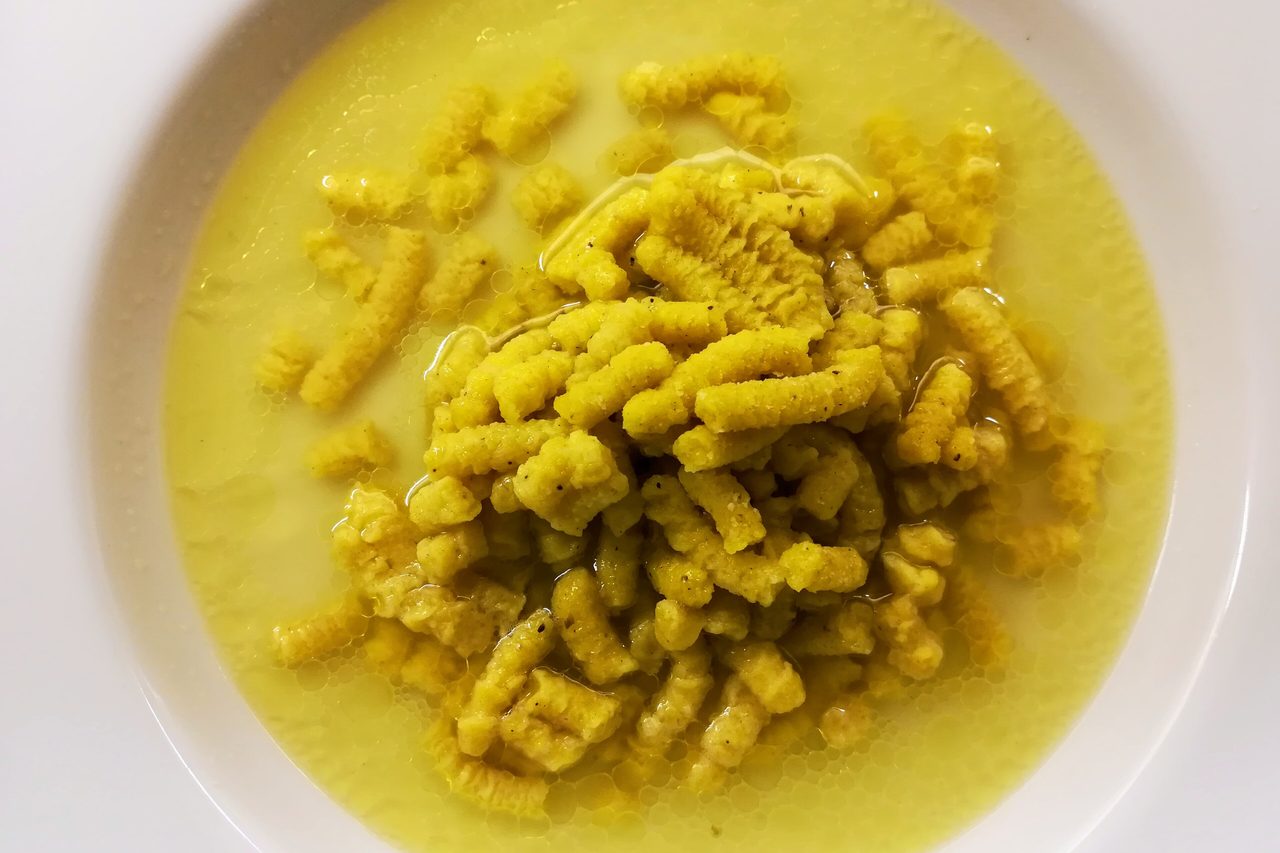
- Spätzle is the same action for a different reason. That dough is also scraped through holes into boiling water, but it has egg and gluten and holds its shape anyway — pressing is a convenience. Here, without pressing, the noodle cannot exist.
- Use older rice. New-crop rice carries too much water and turns to mush when soured.
- Change the soaking water every day. That single thing is the difference between souring and rotting. A sour smell is right; sweetish or slimy means throw it out (fermentation basics).
- Grind it really fine. Grit blocks the press and the strands break part-way.
- Why they are coiled. Boiled rice noodles have a tacky surface and left loose they become one lump. Coiled a mouthful at a time they stay separate and are easy to lift.
- Noodles cool, sauce hot. Nobody in Thailand reheats these. The temperature difference between room-temperature noodles and a hot curry poured over them is part of the dish.
The basics behind this dish
- Cooking Rice: Rinsing, Ratios, and RestingHow far you rinse, how much water, and the ten minutes of resting decide the texture. And for fried rice or risotto, the rules invert.
- Dough and Gluten: When to Build It and When to Avoid ItThe same flour and water becomes a dumpling wrapper or a tender pancake. The difference is whether you built gluten or avoided it — and kneading and resting do different jobs.
- Cooking Noodles: Salt, Starch, and Whether to RinseWhy the water is salted, why oil in it is a mistake, and the actual rule for which noodles get rinsed and which never do.
More of the same kind


More from this country


Sign in to edit.
AI-drafted, editor-reviewed · edits: 0 ·Edit history
https://cookiki.com/en/r/khanom-chin · cookiki · User contributions are licensed under CC BY-SA 4.0.