
Photo: 국립국어원 · CC BY-SA 2.0 kr
Yeot (Grain Candy Made from Rice and Malt)
A sweet with no sugar in it at all: the sweetness is manufactured out of rice. Sprouted barley — yeotgireum — carries amylase, and that enzyme cuts rice starch into maltose. Hold the mash at 55-60°C for eight hours and a thick opaque porridge turns thin and sweet; strain it, boil it down for hours and it becomes jocheong syrup, and further still a candy that sets hard. Two pages on this site already use this sugar, and neither says where it comes from.
Ingredients
- For saccharification
- glutinous or short-grain rice · glutinous gives a better yield1 kg
- yeotgireum (malted barley flour) · sprouted, dried and milled barley; shop-bought is fine200 g
- water · for steeping the malt and cooking the rice together4 L
- For the reduction
- salt · it sharpens the sweetness1 pinch
- To finish — optional
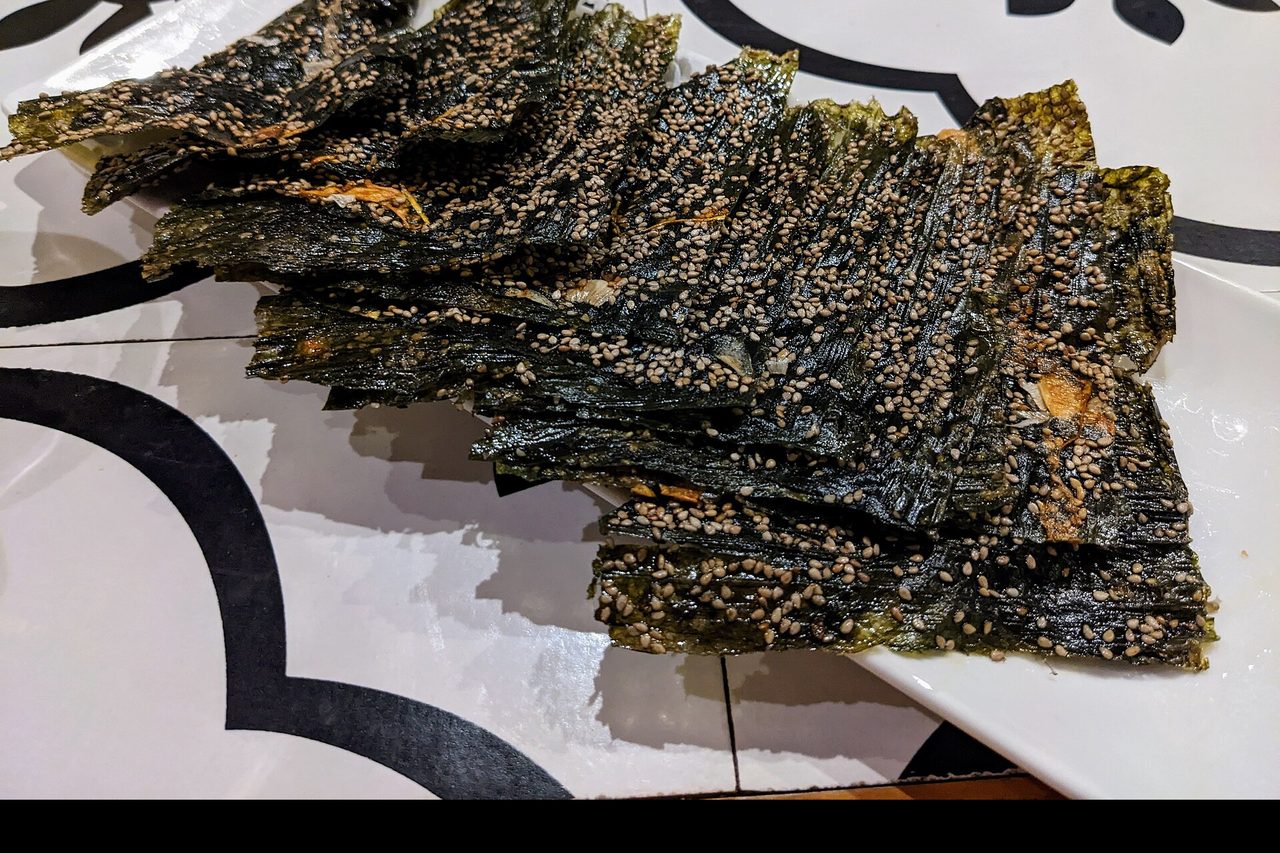
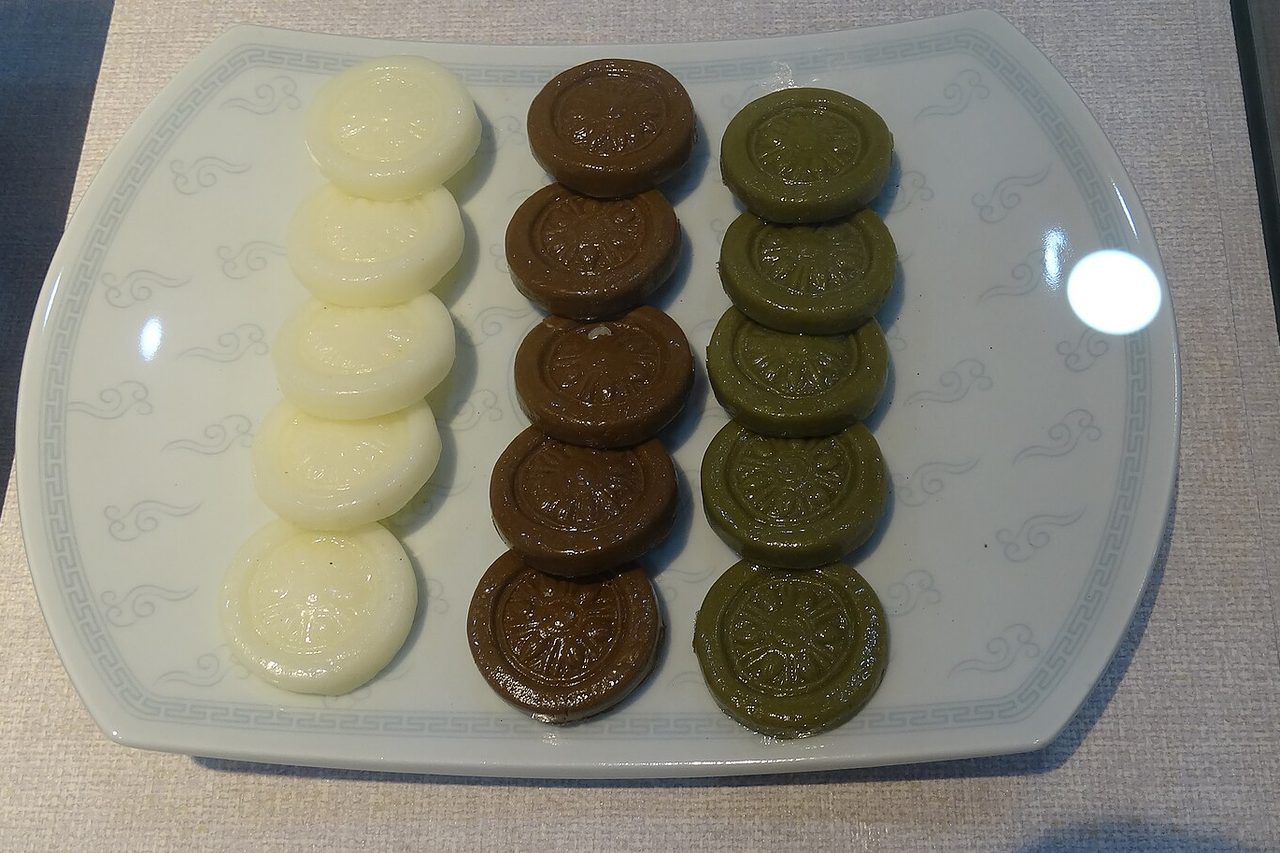
- roasted peanuts or walnuts · for nut yeot, which is what the photograph shows100 g
- black sesame · for sesame yeot50 g
- roasted soybean flour · to dust pulled white yeot so the pieces do not stick50 g
- oil · for the scissors and the board1 tsp
Steps
- ⏲ 20 min
Stir the malt flour into 2L of lukewarm water and rub it hard with your hands. The cloudy water that comes off is the water carrying the enzyme. Strain, discard the husks, let it settle and use the clear liquid above the sediment.
- ⏲ 40 min
Cook the rice into a thick porridge — looser than rice, firmer than congee, on about 2L of water.
- ⏲ 15 min
Cool it to 55-60°C. That number is the whole recipe — above about 70°C the enzyme is destroyed and it will never sweeten, below 50°C it is too slow. Stir in the malt water.
Hold it there for eight to ten hours. A rice cooker on its keep-warm setting is the easiest way. It is done when the thick mash has gone thin, the grains float, and it tastes plainly sweet.
- ⏲ 20 min
Pour it into a cloth and wring it out, discarding the grain. What you have now is thin sweet liquid.
Reduce it in a wide pan over low heat for three or four hours, stirring now and then so it does not catch. At the consistency of corn syrup it is jocheong.
- ⏲ 30 min
Keep going. It is ready when a drop into cold water sets hard and snaps. Pour it onto an oiled board to cool. That is gaengyeot.
- ⏲ 15 min
For white yeot, while it is still pliable, hook it and pull and fold it over and over — two people facing each other is the traditional way. Every fold doubles the layers of trapped air, and the clear amber turns opaque ivory. Cut with oiled scissors and dust with soybean flour.
Tips & Variations
Variations
- Jocheong: stopped at the syrup stage. Brushed onto rice cakes and confectionery, and stirred into braises.
- Gaengyeot: the set version — deep amber, glassy, hard. That is what the photograph shows.
- Huinyeot: gaengyeot pulled and folded until air turns it opaque ivory, so it shatters short instead of breaking like glass.
- Nut and sesame yeot: peanuts, walnuts or black sesame stirred in just before it sets.
- Other grains: glutinous rice is the default, but ko.wikipedia lists corn, sorghum, millet and sweet potato as well.
- Yeotchigi: a game in which you snap a piece and whoever's cut face has the biggest holes wins. The holes are the air trapped by pulling, so the game was also a quality test.
Tips
- The sweetness is manufactured, not added. Yeotgireum is barley that has been sprouted, and while sprouting the grain makes amylase in order to eat its own starch. The recipe pours that enzyme into rice, which has plenty of starch and almost no enzyme, and the enzyme cuts the starch chains into two-unit pieces — maltose.
- Pumpernickel uses the same enzyme differently. That page is about the amylase rye carries itself — normally the enemy of a rye loaf, and pumpernickel spends sixteen hours creeping through the band where it works so that the sugars it makes become browning fuel. Here the enzyme is brought in from outside, the temperature is held rather than passed through, and the sugar itself is the product.
- Two pages here already use this sugar. Peking duck says "maltose does the colour and the surface"; dak gangjeong glazes with corn syrup. Neither says where it comes from. This is the answer.
- Maltose is not sucrose. It is about a third as sweet, so something almost entirely sugar tastes mild; it browns readily (browning); and it resists crystallising, so it stays tacky rather than setting grainy. That is why Korean braises and glazes reach for syrup rather than sugar — and none of the four jobs what sugar does lists covers that behaviour.
- Why pulling turns it white. Each fold doubles the layers, so ten folds is more than a thousand (Lanzhou lamian does that arithmetic with noodles). The films of air trapped between them scatter light in every direction, and clear amber reads as white. The sugar itself is unchanged.
- Tanghulu and lokum sit on the same axis. Tanghulu drives the water out until sugar sets like glass, lokum works to stop it setting at all, and yeot sets it and then puts air into it so that it shatters.
- With no thermometer, use a bowl of cold water. Judging the stage by how a drop sets is the old method and still the accurate one.
The basics behind this dish
- What Sugar Does Besides SweetenCutting the sugar does not just cut sweetness. Colour, moisture, structure, and the counterweight to salt and acid — which is why savoury dishes call for it too.
- Deep Frying: Temperature, Batter, and the Second FryFrying is not cooking in oil so much as trading the food's water for it. Two temperatures, what each kind of coating is for, and why the second fry exists.
- Heat Control: Preheating, Oil, and Reading the PanThe same ingredients become a different dish depending on pan temperature. When to add the oil, how to read heat by sound, and which dishes want low heat instead.
More of the same kind



More from this country


Sign in to edit.
AI-drafted, editor-reviewed · edits: 0 ·Edit history
https://cookiki.com/en/r/yeot · cookiki · User contributions are licensed under CC BY-SA 4.0.