
Photo: Ptko · CC BY-SA 4.0
Soboro-ppang (Peanut Streusel Bun)
The standard of every Korean bakery: a sweet bun under a peanut-butter streusel. The cracked surface is where the name comes from, and it is not decoration but the result of two doughs behaving differently in the oven — the bun rises, the topping cannot stretch, and it tears. Keeping that topping loose and crumbly is very nearly the whole recipe.
Ingredients
- Makes 8
- Bun dough
- strong white flour300 g
- sugar45 g
- salt5 g
- instant dried yeast5 g
- egg · at room temperature1
- milk · warmed to about 35C150 ml
- butter · soft, added after the dough comes together40 g
- Soboro topping
- peanut butter · where this bun gets its flavour60 g
- butter · cold50 g
- sugar60 g
- egg · beaten, half used0.5
- plain flour120 g
- baking powder2 g
- salt1 pinch
- To finish
- water · to make the topping stick2 tbsp
Steps
- ⏲ 15 min
Mix the sugar, salt and yeast into the flour, keeping the salt and yeast on opposite sides so they do not touch, then add the egg and warm milk and bring it together. Once it forms a mass, work in the soft butter and knead 15 minutes — until a stretched piece goes translucent without tearing.
- ⏲ 60 min
Round it, cover, and give it 60 minutes in a warm place. It should double, and a floured finger pushed into it should leave a dent that stays.
- ⏲ 30 min
Meanwhile make the soboro. Rub the cold butter, peanut butter, sugar and salt together loosely, add half the beaten egg, then the sifted flour and baking powder, working it with your fingertips only into loose crumbs. Do not knead it — a smooth dough will not crack, it just covers the bun in a sheet. Chill 30 minutes.
- ⏲ 15 min
Knock the dough back, divide into 8, round each and rest them covered 15 minutes. Without that rest the surface tears when you shape them again.
Re-round each piece, brush the top only with a thin film of water, and press it into a dish of the crumbs. Do not roll it — crumbs down the sides seal the bun and it has nowhere to expand, so nothing cracks. Press once with your palm so the topping sits thickly.
- ⏲ 40 min
Space them on a tray and prove 40 minutes. Stop at about 1.7 times their size. Fully proved dough collapses under the weight of the topping and has no lift left to push it apart in the oven.
- ⏲ 13 min
Bake at 190C for 13 minutes. Hot and short is the point — the topping is sugar and butter, and given longer it burns before the crumb is cooked.
- ⏲ 20 min
Move to a rack and cool 20 minutes. Straight from the oven the topping is still soft and comes off on your hands; it sets crisp as it cools.
Tips & Variations
Variations
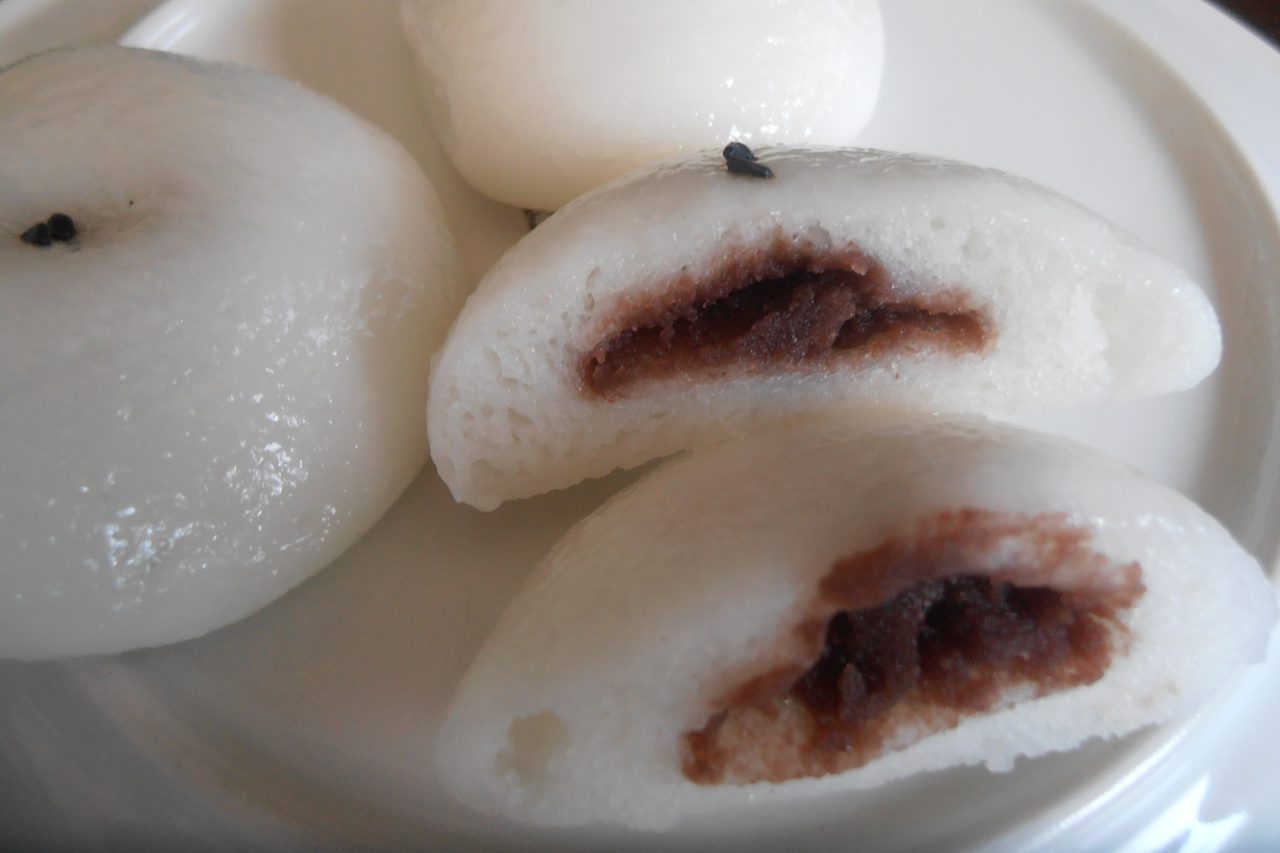
- With red bean: sweet bean paste inside, soboro outside. The commonest combination on a Korean bakery shelf, and the nuttiness and the sweetness hold each other in check.
- Fried soboro: the Daejeon version, filled with bean paste and deep-fried instead of baked. The topping crisps a second time in the oil and goes much darker.
- Custard soboro: filled with custard, piped in after baking and cooling.
- Without peanut butter: butter, sugar and flour alone still make a soboro. But the smell people recognise is the peanut, and without it this is closer to a German streusel.
- Japan's melonpan: the same idea, but the topping is a single sheet of cookie dough scored into a grid with a knife. Even the way it is applied differs from pressing loose crumbs on.
- Mexico's concha: the third form of the same structure — a sweet paste rolled thin over the bun and cut into a shell pattern. Putting a second dough on top of a sweet bun was arrived at separately in several places.
- The rest of the bakery: brioche, babka, kanelbulle, pain au chocolat, croissants, doughnuts.
- Korea's other flour snack: hotteok. In the bean-paste-inside shape it also overlaps with char siu bao.
Tips
- Do not knead the soboro. The name of the bun rides on this. Rub it with your fingertips only and leave pea-sized lumps; worked into a smooth dough it stretches in the oven and nothing cracks. If it starts coming together, put it back in the fridge to firm the butter.
- The butter in the topping stays cold. Same reason as in pastry: melted butter wets the flour into a dough, cold butter stays in pieces and keeps it crumbly (dairy and heat).
- Wet the top only. Crumbs down the sides seal the bun all round and it has nowhere to push. The cracking happens because it can only rise upward.
- Do not fully prove the second rise. This is the opposite of most bread. Fully proved, the dough collapses under the weight of the topping and has no lift left for the oven. Stopping around 1.7 times is what leaves oven spring to tear the topping open (fermentation basics).
- Bake hot and short. The topping is sugar and butter; a long bake at a low temperature melts it flat and then burns it. 190C for 13 minutes, and judge the colour by the exposed sides of the bun rather than by the topping (what your oven is doing, browning).
- Knead the bun dough properly. It has to carry the topping's weight and then push it apart, and under-developed dough cannot. Stretch a piece until it goes translucent (dough and gluten, choosing flour).
- Keep salt and yeast apart. In direct dry contact the salt kills the yeast. Put them on opposite sides of the bowl and mix the flour through before the liquid goes in.
- Milk no hotter than 35C. Hot milk damages the yeast, cold milk drags the rise out. Lukewarm on the back of your hand is right.
- Do not skip the 15-minute bench rest. Dough tightened by dividing will tear at the surface if you re-round it immediately, and the topping sinks into the tear.
- Eat them cool. Straight from the oven the topping is soft and comes away on your fingers. Twenty minutes of cooling sets the sugar and crisps it, and that crispness against the soft crumb is the point of the bun (what sugar does, serving temperature).
- Freeze the leftovers. By the next day the topping has drawn moisture out of the bun and gone soft. Wrapped individually as soon as they cool and reheated in a toaster oven, the crispness comes back (freezing and thawing, reviving leftovers).
- Keep spare soboro. Freeze what is left over for next time, or scatter it straight onto muffins or a fruit crumble.
The basics behind this dish
- Dough and Gluten: When to Build It and When to Avoid ItThe same flour and water becomes a dumpling wrapper or a tender pancake. The difference is whether you built gluten or avoided it — and kneading and resting do different jobs.
- Heat Control: Preheating, Oil, and Reading the PanThe same ingredients become a different dish depending on pan temperature. When to add the oil, how to read heat by sound, and which dishes want low heat instead.
- Knife Skills: Grip, Cuts, and Why Size MattersHow you hold the knife matters more than how fast you cut. The pinch grip, the claw hand, and why uniform size is a cooking decision rather than a cosmetic one.
More of the same kind


More from this country


Sign in to edit.
AI-drafted, editor-reviewed · edits: 0 ·Edit history
https://cookiki.com/en/r/soboro-ppang · cookiki · User contributions are licensed under CC BY-SA 4.0.