
Spanakopita
A Greek pie of spinach, feta, and herbs layered in thin, crackly phyllo pastry and baked crisp. Shatteringly flaky outside, savory and moist within. With shop-bought phyllo it is an easy vegetarian treat to make at home.
Ingredients
- Phyllo pastry · thawed, ~12 sheets1 pack
- Spinach · blanched, squeezed dry500 g
- Feta cheese · crumbled200 g
- Scallion / onion · finely chopped1
- Eggs2
- Dill & parsley · chopped3 tbsp
- Olive oil (or melted butter) · for the phyllo0.5 cup
- Nutmeg, salt, pepper · to taste
Steps
- ⏲ 8 min
Blanch the spinach, squeeze it very dry, and chop. Cook the onion and scallion in a pan and let cool.
- ⏲ 3 min
In a bowl, mix the spinach, feta, cooked onion, eggs, herbs, nutmeg, salt, and pepper into a filling.
- ⏲ 4 min
Lay a phyllo sheet in an oiled tray and brush with oil; stack half the sheets (6) this way.
- ⏲ 4 min
Spread the filling evenly, cover with the remaining phyllo the same way, and oil the top sheet. Score into pieces.
- ⏲ 45 min
Bake at 180°C for 40–45 minutes until golden and crisp. Cool slightly, then cut.
Tips & Variations
Variations
- Mini triangles: Cut phyllo into strips and fold into individual triangles.
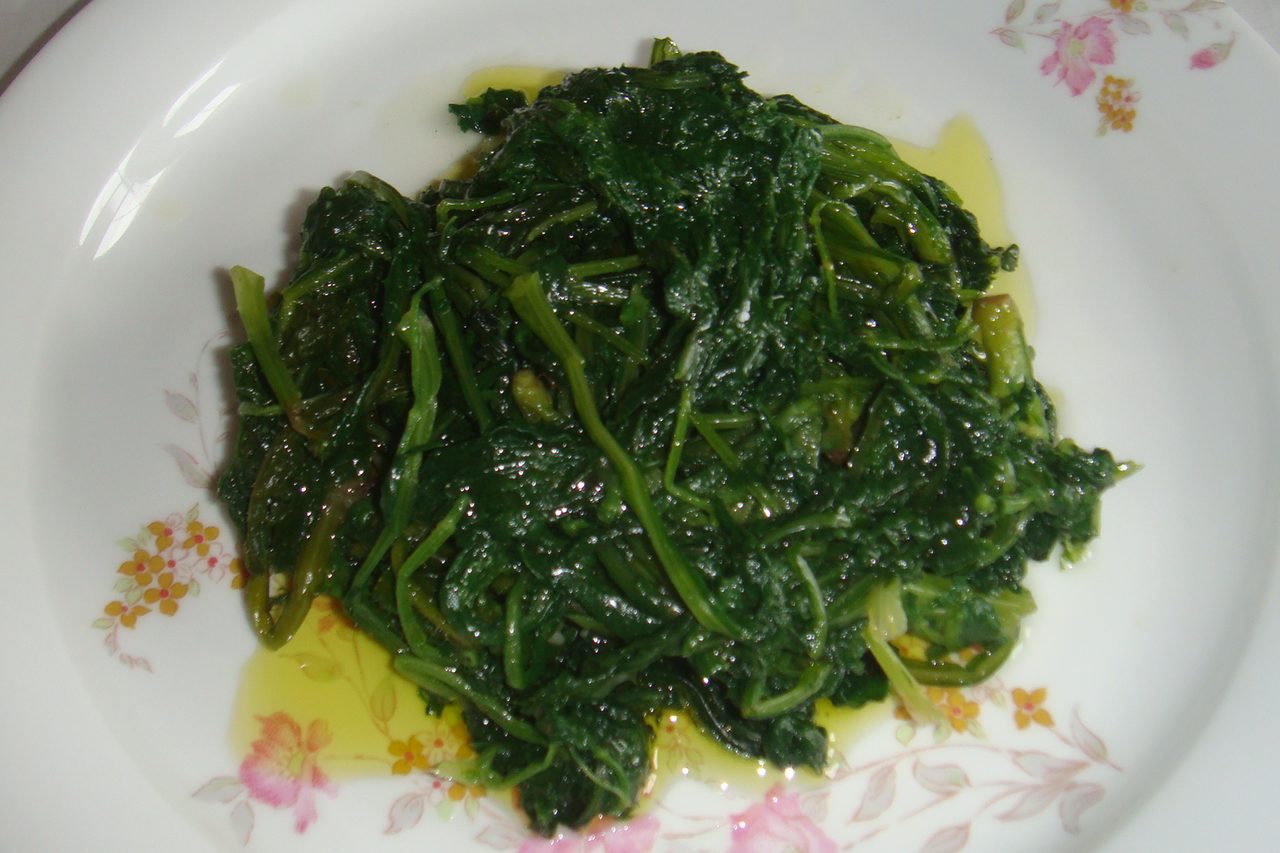
- Hortopita: Use chard or wild greens instead of spinach.
- Extra cheese: Add ricotta or cottage cheese for a softer filling.
- Vegan: Replace feta and egg with tofu and nutritional yeast.
Tips
- Squeeze the spinach really dry so the pie doesn't turn soggy.
- Phyllo dries fast — keep it under a damp towel as you work.
- Brush each sheet with a thin layer of oil for flaky layers.
- Score before baking so it cuts cleanly afterward.
- The spinach is not the only thing bringing water. Feta is a brined cheese and it goes on giving up whey in a 180°C oven, which the tip above does not mention — so drain it, pat it dry and prefer a firm block in brine to the soft crumbled kind sold dry. It is also carrying most of the seasoning: 200g of feta is a lot of salt, which is why the filling needs almost none added, and why tasting it before the eggs go in is worth the thirty seconds.
- The eggs are the reason it can be cut into squares. Squeezing gets the free water out, but a pile of chopped spinach and crumbled cheese still has nothing holding it together. Two eggs set on baking and turn that pile into a slab, so a slice keeps its edge instead of spilling. Leave them out and you have a very good filo pie that has to be eaten with a fork.
- Score it now because you cannot cut it later. Raw filo gives under a knife; baked, it shatters, and a knife dragged across a dozen crisp sheets tears the top layers and pushes the filling out. Cutting through the top stack before it goes in also gives the steam somewhere to leave, so the lid does not dome and lift away from the filling. Kibbeh scores its top for the same reason.
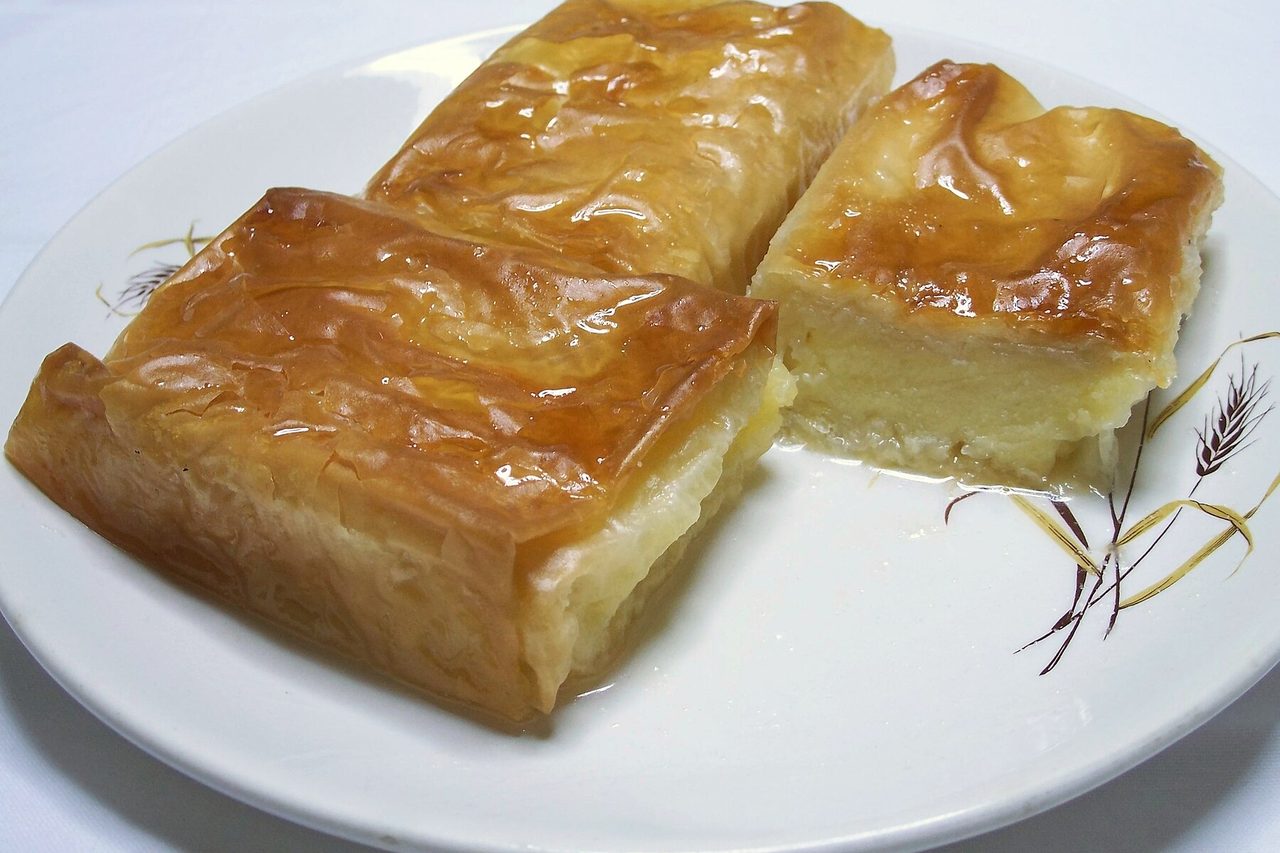
- Where it sits among the filo dishes here. Baklava is the sweet direction and galaktoboureko the Greek custard one; su böreği is the interesting opposite, since it puts an egg-and-milk mixture between the sheets so that they stick together rather than flake apart. And horta notes that hortopita — the same pie with wild greens — must be wrung out for exactly the reason this one must.
The basics behind this dish
- Browning and the Maillard ReactionMeat fails to brown for one of three reasons: it is wet, the pan is cool, or you put too much in at once. Plus how the brown film stuck to the pan becomes your sauce.
- Cooking Meat: Temperature, Resting, and Cutting Against the GrainDoneness is a core temperature, not a number of minutes. What resting actually does, how to handle a thick cut, and why the direction you slice changes the texture.
- Knife Skills: Grip, Cuts, and Why Size MattersHow you hold the knife matters more than how fast you cut. The pinch grip, the claw hand, and why uniform size is a cooking decision rather than a cosmetic one.
More of the same kind


More from this country


Sign in to edit.
AI-drafted, editor-reviewed · edits: 0 ·Edit history
https://cookiki.com/en/r/spanakopita · cookiki · User contributions are licensed under CC BY-SA 4.0.