
Photo: TurnOnTheNight · CC BY-SA 4.0
Sundae (Blood Sausage with Glass Noodles)
Pig intestine stuffed with blood, glass noodles and vegetables, then steamed. The blood is not there for flavour: it sets like egg when it heats and binds everything else into one mass, which is why a version without it falls apart the moment you slice it. Fill the same casing with something else holding it together and you get a completely different food.
Ingredients
- Casing
- pig small intestine · order it from a butcher ahead1.5 m
- plain flour · for scrubbing the casing4 tbsp
- coarse salt · same job3 tbsp
- rice wine · in the final rinse3 tbsp
- Filling
- pig's blood · strained to break up the clots. It is the binder, not the flavour500 ml
- sweet potato glass noodles · soaked, cut into 3cm lengths150 g
- bean sprouts · blanched and wrung out hard200 g
- blanched cabbage leaves · chopped small and wrung out150 g
- spring onion · finely chopped1
- onion · finely chopped0.5
- garlic · minced1 tbsp
- ginger juice1 tsp
- ground perilla seed2 tbsp
- soup soy sauce2 tbsp
- sesame oil1 tbsp
- salt and pepper · to taste
Steps
Scrub the intestine repeatedly with coarse salt and flour, then turn it inside out and do the same again. The flour grips the mucus and takes it away with it — rinsing with water alone leaves the smell behind. Finish in water with the rice wine in it.
- ⏲ 5 min
Soak the noodles and cut them into 3cm lengths. Blanch the sprouts and cabbage and wring them out as hard as you can. A wet filling releases water in the steamer and pushes the casing apart from the inside.
Toss the vegetables and noodles with the garlic, ginger juice, perilla, soy sauce, sesame oil, salt and pepper.
Strain the blood and stir it in. The blood is the binder, not the flavour — it sets like egg white as it heats and holds everything else together as one mass. The mixture should drop from the spoon rather than run off it.
Tie one end of the casing off tightly, fit a funnel and fill. Fill it only about seven-tenths. The noodles and vegetables take up water and swell, so a tightly packed casing always bursts (wrapping and sealing).
Tie it off into 20cm links and knot the far end. Each link needs slack, which is the room the filling expands into.
- ⏲ 5 min
Steam gently for 5 minutes. Once the surface has firmed, prick it all over with a skewer. That gives the steam forming inside a way out, and skipping it is the most common reason they burst.
- ⏲ 35 min
Steam for another 35 minutes. Do not let it run at a furious boil — hard steam tears the casing before the filling is done (steaming).
Push a skewer deep into a link: clear juice means it is cooked. If it runs red, give it another ten minutes.
- ⏲ 30 min
Lift them out and cool them completely. Sliced hot, the filling is still soft and the cut face collapses; cold, it is firm enough to cut cleanly into 1.5cm rounds. Serve with salt and pepper, or with ssamjang (serving temperature).
Tips & Variations
Variations
- Chapssal sundae: filled with glutinous rice instead of glass noodles. Closer to the older form and much heavier. Rice takes up far more water, so fill it even less — six-tenths is safe.
- Abai sundae: the Hamgyong style, stuffed into the large intestine so each link is far thicker. It survives around Sokcho, where northern refugees settled. Being thick, it takes roughly twice as long to steam.
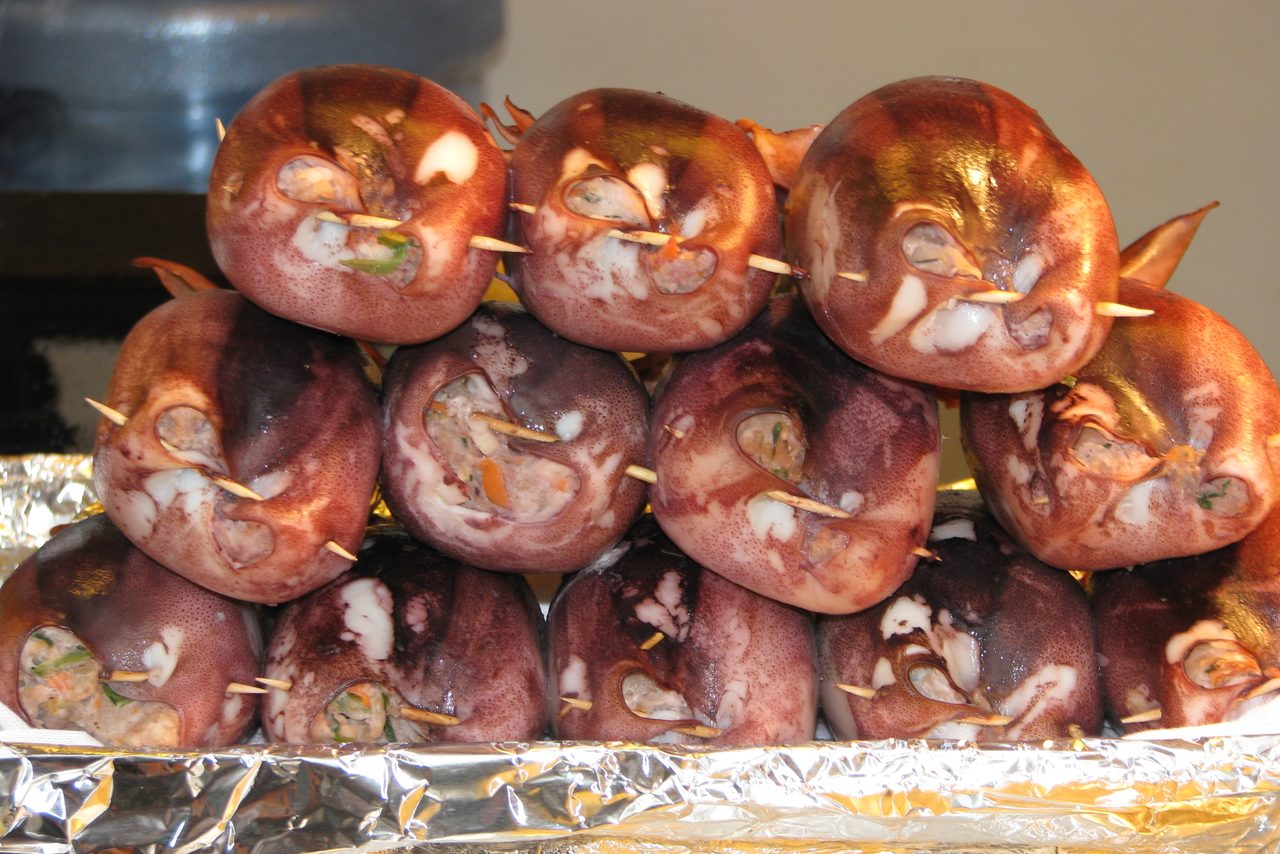
- Ojingeo sundae: on the east coast the filling goes into a squid body instead of a casing. Squid shrinks with heat, so overfilling bursts it here too.
- Baek sundae: white sundae, made without blood. With no binder the filling breaks up easily, which is why it is usually stir-fried on a griddle with vegetables rather than sliced.
- Sundae-guk: sundae and head meat in a long-simmered pork bone broth — the same family of broth as seolleongtang.
- Against mititei: a Romanian sausage with no casing at all, shaped by hand and grilled. That one relies on the meat's own tackiness to hold together; here the blood does that job.
- Against budae jjigae and currywurst: there the sausage is something you buy. Three pages here fill a casing themselves — this one, weisswurst and haggis — and each is held together by something different: blood, salt-drawn muscle protein, and oatmeal that swells and stays discrete.
- Against jokbal and suyuk: three pork dishes that are all boiled or steamed, cooled, and then sliced — and all three are ruined by slicing them hot.
Tips
- Cleaning the casing is half the work. Scrubbing with flour and coarse salt is not folklore: the flour binds to the mucus and comes away with it, and an intestine rinsed only in water smells completely different. Turning it inside out and doing the other side matters.
- The blood is a binder, not a flavouring. Its proteins coagulate with heat much as egg does, and that is what grips the noodles and vegetables. Once you know that, it also explains why baek sundae falls apart and why it is served stir-fried instead of sliced.
- Strain the blood. Clots left in set into dense pockets while the rest stays loose.
- Wringing the vegetables out is what stops bursts. The water in blanched sprouts and cabbage has nowhere to go; in the steamer it boils and pushes the casing apart. Squeeze once more after you think you are done.
- Fill to seven-tenths. This is the most common failure. The noodles need room to swell into. The link should feel soft when pressed — if it is taut it is already overfilled (wrapping and sealing).
- Steam five minutes, then prick. Wait until the surface has set, or the filling leaks straight back out of the holes.
- Keep the steam gentle. A furious boil tears the casing before the filling has cooked. Steam escaping steadily around the lid is plenty (steaming).
- Clear juice is the signal. It is more reliable than the clock; thickness and fill level can change the time by ten minutes or more.
- Cool it completely before slicing. Hot sundae collapses on the board however well it was made. Slice it cold and re-warm the slices in steam — a microwave turns the casing rubbery.
- Make a lot and freeze it. Steam, cool, freeze the links whole, and steam them again from frozen. This was food made in quantity for feast days and kimchi season.
The basics behind this dish
- Knife Skills: Grip, Cuts, and Why Size MattersHow you hold the knife matters more than how fast you cut. The pinch grip, the claw hand, and why uniform size is a cooking decision rather than a cosmetic one.
- Wrapping and Sealing: Why Dumplings BurstA dumpling bursts because of water in the filling, almost every time. How to deal with the filling first, when to seal with water and when with egg, why the pleats are structural, and how the cooking method decides the thickness of the wrapper.
- Deep Frying: Temperature, Batter, and the Second FryFrying is not cooking in oil so much as trading the food's water for it. Two temperatures, what each kind of coating is for, and why the second fry exists.
More of the same kind



More from this country


Sign in to edit.
AI-drafted, editor-reviewed · edits: 0 ·Edit history
https://cookiki.com/en/r/sundae · cookiki · User contributions are licensed under CC BY-SA 4.0.