
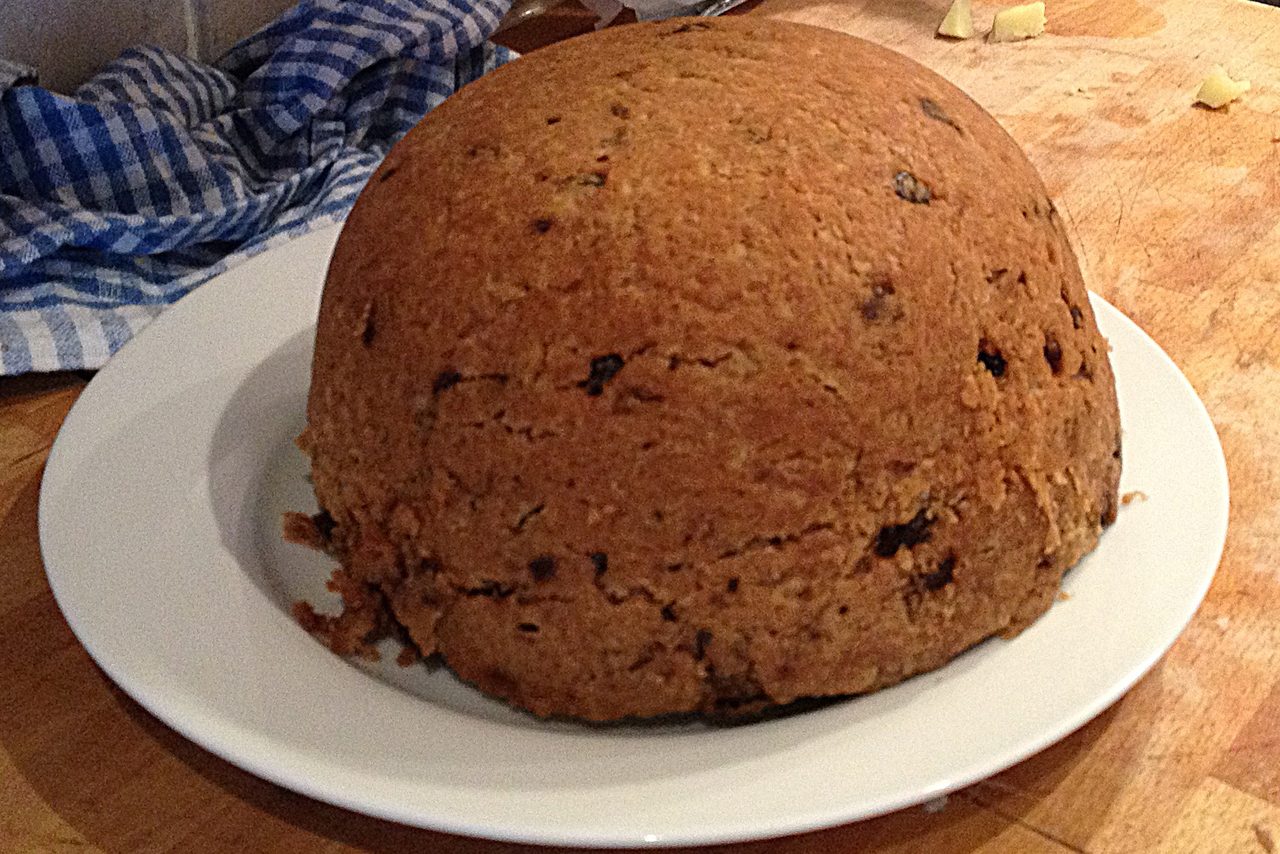
Photo: zingyyellow...! from Wales Cymru UK · CC BY 2.0
Bara Brith (Welsh Tea-Soaked Fruit Loaf)
The Welsh "speckled bread": dried fruit steeped overnight in strong tea, and that one step is the whole loaf. Dried fruit is powerfully hygroscopic, so put it in dry and it spends the bake pulling water out of the crumb around it — you get a tight, dry loaf and fruit that is still leathery. Soaked first, the fruit arrives already full and takes nothing, and because the leftover tea goes into the batter as well, none of that water is lost. It is why a loaf with no butter in it at all comes out moist.
Ingredients
- To steep (the night before)
- mixed dried fruit · raisins, sultanas and currants; a little candied peel is good too350 g
- strong hot tea · three bags brewed five minutes, poured over hot300 ml
- dark brown sugar · muscovado or dark brown; it steeps with the fruit150 g
- Batter
- plain flour350 g
- baking powder2 tsp
- mixed spice · or mix your own: 2 parts cinnamon, 1 nutmeg, 1 allspice2 tsp
- salt0.25 tsp
- egg · beaten1
- marmalade · optional, for aroma and gloss1 tbsp
- To finish
- honey · warmed, brushed over the top; sieved marmalade works too1 tbsp
- butter · none goes in the loaf — this is for spreading on the slices50 g
Steps
Brew the tea strong and pour it hot over the dried fruit and the dark sugar. Cover and leave at room temperature overnight — 8 hours at least. This one step is the whole loaf: put the fruit in dry and it spends the bake taking water out of the batter around it.
By morning the fruit has drunk nearly all the tea and plumped up. Do not drain it — the remaining liquid goes into the batter. Soaking sorts soaking liquids into discard and keep, and dried fruit is on neither list: here you keep it not for aroma, as with dried mushrooms, but because that liquid is the recipe’s water.
Heat the oven to 160C (140C fan) and line a 900g loaf tin (what your oven is doing).
In a large bowl whisk together the flour, baking powder, mixed spice and salt. Baking powder is the only lift here; the acid-base reaction itself is explained on Irish soda bread.
Tip in the soaked fruit with all its liquid, add the egg and the marmalade if using, and stir only until no dry flour shows. Thirty seconds is enough — beyond that you build gluten and it turns tough, the same reason banana bread says to fold gently.
- ⏲ 90 min
Scrape into the tin, level the top and bake 1 hour 30 minutes, until a skewer in the centre comes out clean. Cover with foil at about the hour if the top is darkening too fast.
- ⏲ 10 min
Leave in the tin 10 minutes, turn out onto a rack, and brush the warm loaf with the warmed honey for gloss.
Cool completely, then leave it a day before cutting. Fresh from the oven it crumbles; after a day the water the fruit is holding has spread evenly through the crumb and it slices moist. Cut thick and butter it.
Tips & Variations
Variations
- Dried fruit takes water away from what is around it. That single fact is the whole page. A raisin is a concentrated lump of sugar at about 15 percent moisture, so in a batter it pulls water toward itself osmotically. Bake it dry and the crumb goes tight and dry while the fruit stays leathery. Steeped first, the fruit goes in already saturated and takes nothing. It is why a loaf with no fat in it at all comes out moist.
- The site has been saying half of this for a while. Pound cake has one line telling you to toss dried fruit in a little flour and never says why, and apfelstrudel soaks its raisins for thirty minutes and then drains them. This page supplies the reason, and keeps the liquid.
- It is a case missing from soaking's own list. That guide sorts soaking liquid into discard (beans, dried chillies, anything gritty) and keep (shiitake, dried shrimp, sun-dried tomatoes, kombu). Dried fruit is on neither. And the reason to keep it is different from any of those: mushroom water is kept for aroma, and this tea is kept because it is the batter's water.
- Why tea rather than water. Water works. But 350g of dried fruit is intensely sweet on its own, and the tannin in strong tea gives a slight astringency that holds that sweetness in check — and darkens the crumb besides. Earl Grey or a splash of whisky are common; plenty of Welsh households simply use what is left in the pot.
- Barmbrack is the Irish sibling — the same tea-steeped fruit loaf, baked at Halloween with a ring hidden inside, and whoever gets the ring is said to marry within the year. The Irish version is more often yeasted.
- It was originally a yeast bread. The version most people bake now is the baking-powder cake style; the traditional one is a proper yeasted loaf, kneaded and given two rises, with the fruit worked in at the last fold. Both are recorded as bara brith.
- Where it sits among fruit breads. Stollen takes the same steeped fruit but feeds the loaf a great deal of butter so it keeps for weeks; babka rolls a filling through a yeasted dough for the pattern. This is the plainest of the three — no fat, and done in a day.
- With tea. In Wales it is cut thick for afternoon tea and spread with salted butter; a slice with Welsh cheese (Caerphilly) on top is just as common.
Tips
- Do not shorten the overnight steep. In a hurry, pour the tea on boiling and give it two hours at the very least — press a piece and it should be soft and plump right through. Fruit that is only wet on the surface will take the rest out of the batter as it bakes.
- Never pour the leftover tea away. One egg is the only other liquid in the recipe.
- Stir for thirty seconds. The fruit makes the batter heavy and tempts you to keep working it; every extra turn makes it tougher.
- 160C is low, and that is right. Between the sugar and the fruit there is a lot of sugar in this loaf, and any hotter the outside burns before the middle sets. Expect to cover it with foil at about the hour.
- Leave it a day before cutting. This is the loaf's second rule, and it is a genuinely different bread on day two.
- It keeps. With no fat there is nothing to go rancid, and the sugar in the fruit holds the water, so wrapped well it stays moist for a week. Once it starts to dry, toast it and butter it.
The basics behind this dish
- Soaking: Beans, Rice, and Everything DriedWhen beans refuse to soften no matter how long you boil them, and when the soaking water is an ingredient rather than waste. The old rule about salt is wrong.
- What Your Oven Is Actually DoingThe dial and the air rarely agree. Why preheating takes twenty minutes rather than five, why convection means lowering the number, and what an air fryer actually is.
- Dough and Gluten: When to Build It and When to Avoid ItThe same flour and water becomes a dumpling wrapper or a tender pancake. The difference is whether you built gluten or avoided it — and kneading and resting do different jobs.
More of the same kind


More from this country


Sign in to edit.
AI-drafted, editor-reviewed · edits: 0 ·Edit history
https://cookiki.com/en/r/bara-brith · cookiki · User contributions are licensed under CC BY-SA 4.0.