
Photo: bryan... · CC BY-SA 2.0
Jeonbok-juk (Abalone Rice Porridge)
The abalone porridge of Jeju and the east coast. This site’s rice guide calls porridge a failure in two separate places — broken grains turn the pot to porridge, and porridge throughout means too much water or grains broken while rinsing. Juk does all three on purpose: the rice is soaked and then half-crushed, the water goes in at eight times its volume, and you stir until the swollen starch granules burst and disperse. The other half of the dish is the gaeu — the abalone’s viscera, which most people throw away. Fried in sesame oil before anything else, it is what gives the porridge its green cast and its taste of the sea, and it is the difference between this and plain rice porridge with abalone on top.
Ingredients
- Rice
- short-grain rice · 180ml, about 150g; plain short-grain, not glutinous1 cup
- sesame oil2 tbsp
- water · eight times the volume of the rice; stock works but the gaeu already brings savour1.4 L
- Abalone
- abalone · medium, about 300g in the shell; live, so the viscera are intact4
- rice wine · sprinkled over the cleaned meat1 tbsp
- To season and finish
- salt · added off the heat1 tsp
- sesame oil · a few drops to serve1 tsp
- sesame seeds · optional1 tsp
- shredded toasted seaweed · optional2 tbsp
Steps
- ⏲ 30 min
Rinse the rice gently and soak it 30 minutes. The reason is not the one in soaking or cooking rice — this is not about cooking evenly. It is so the grain can be crushed.
Drain and crush the rice about halfway — a few strikes in a mortar, or press it under a rolling pin, until most grains are in halves. This step is why it thickens in forty minutes. Grind it fine and you get paste: as with bindaetteok the point is a deliberately coarse crush, though to a different end.
Slide a spoon between the abalone shell and the meat to release it. Separate the gaeu — the viscera — whole, without bursting it. That is half the dish. Cut the teeth out of the meat and scrub it with a brush.
Slice the meat 2-3mm thin and sprinkle the rice wine over it. Mash the gaeu fine with a knife, or push it through a sieve.
- ⏲ 30 sec
Heat the 2 tbsp of sesame oil and fry the gaeu for 30 seconds. It darkens and the smell comes up. This is where the porridge gets its green cast.
- ⏲ 3 min
Add the crushed rice and fry 3 minutes, until every grain is coated and looks translucent.
- ⏲ 35 min
Pour in the water, bring it to the boil, then drop to a low simmer and cook 35 minutes, stirring often and scraping the base with a wooden spoon. The stirring is what bursts the swollen starch granules and disperses them — thickening lists that as the fault that thins a sauce; here it is the objective.
- ⏲ 2 min
When the grains have lost their shape and the liquid is one thing with them, add the abalone and give it 2 minutes. Abalone wants either two minutes or two hours and there is nothing in between — longer and it turns to rubber.
Off the heat, season with salt. Season at the end: the water reduces as it cooks, so thickness and saltiness rise together and anything judged at the start ends up too salty.
Bowl it, top with a few drops of sesame oil, the sesame seeds and the seaweed, and serve at once. As it cools the starch retrogrades, the water separates out and it turns gluey.
Tips & Variations
Variations
- The state the guide calls a failure is this dish's objective. Cooking rice says, of rinsing, that "broken grains turn the pot to porridge", and its failure list has "porridge throughout → too much water, or grains broken while rinsing". Juk does all three on purpose: eight times the water, the grains broken, and stirred so they break further.
- Same physics as risotto, a different stopping point. That same guide tells you not to rinse rice for risotto or paella because "you need the surface starch". Risotto rubs off only the surface starch and keeps the grain al dente. Juk goes far past that, until the granules have drunk enough water to rupture and the grain has no shape left. One protects the grain; the other abolishes it.
- It is not one of the four methods in thickening. That guide counts a starch slurry, a roux, reduction, and "collagen is the fourth method". What thickens juk is none of them: it is the rice's own starch, not added but extracted by destroying the grain.
- Throw the gaeu away and it is a different dish. Plain rice porridge with abalone on top is not jeonbok-juk. The gaeu is the abalone's digestive gland, and it holds the seaweed the animal has been eating — which is exactly where the green cast and the deep taste of the sea come from. Korean Wikipedia's own definition is porridge "made with abalone or abalone viscera (Jeju dialect: gaeu)".
- The other juks thicken differently. Dak-juk picks the meat off a poached chicken; hobak-juk boils and mashes pumpkin and takes its body from glutinous rice flour, not from broken grains; heugimja-juk grinds soaked glutinous rice and toasted black sesame from the start. Pat-juk is a winter dish eaten at the solstice.
- Made with glutinous rice it thickens faster and stickier, but nothing of the grain survives and it reads flat. That is why plain short-grain is the base; many households use half and half.
- Jeju, the east coast, and the palace. It developed where haenyeo divers harvest abalone — Jeju and the east coast of Gangwon — and abalone was a luxury recorded again and again as tribute to the king. Being easy to digest it is also invalid food, and it is now sold in porridge shops nationwide.
- Obunjagi: Jeju also makes it with the smaller obunjagi abalone. Less gaeu each, so you use more of them.
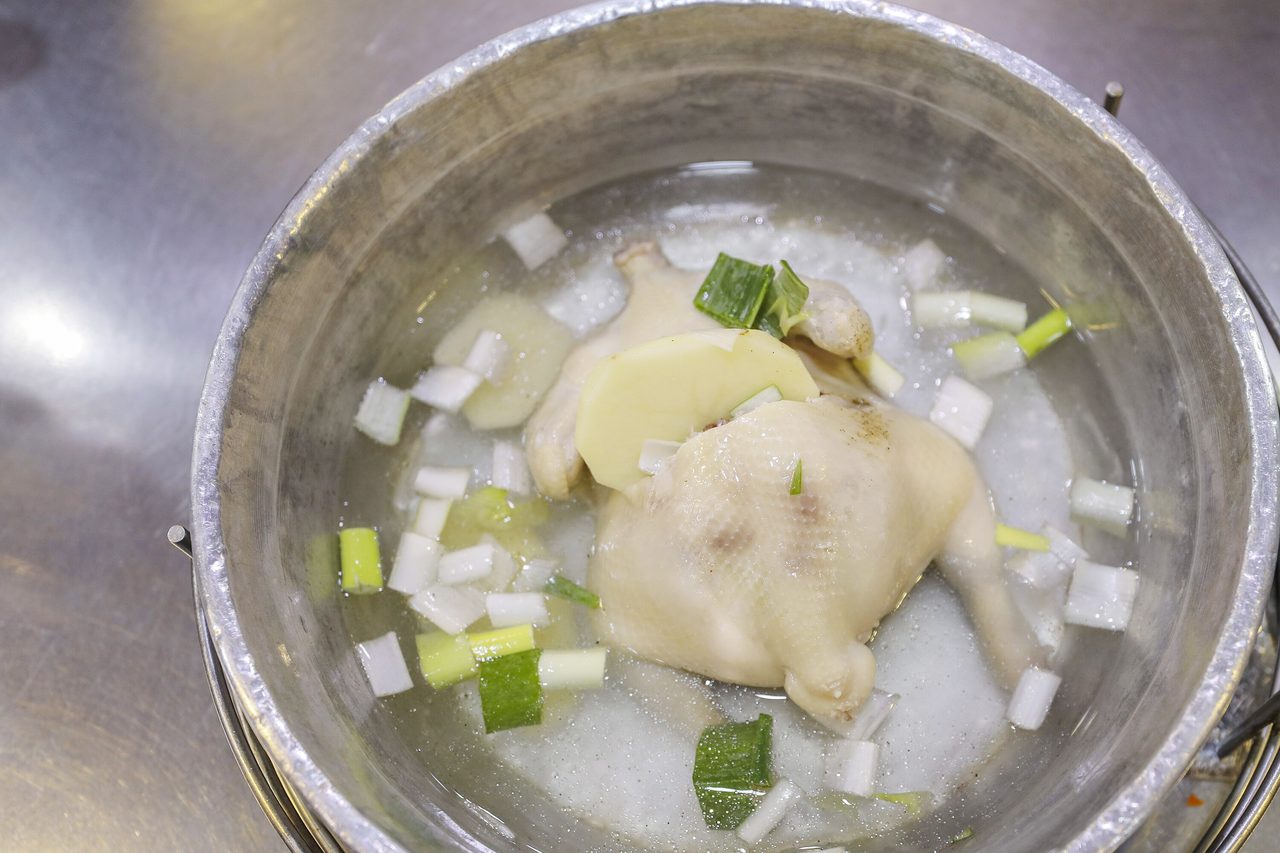
- Not the rice inside samgyetang. That is glutinous rice swelling with broth inside the bird; nothing is crushed and nothing is stirred.
Tips
- Do not grind it fine. Halves are the target. Blitzed to flour it becomes a paste you cannot undo.
- Release the gaeu without bursting it. Push the spoon in against the inside of the shell and it usually comes away whole. Burst, it stays behind on the shell.
- Cut the abalone's teeth out — the hard part at the front of the foot. Left in, you find them.
- Keep scraping the base. Starch settles and sticks, that patch scorches, and the bitterness goes through the whole pot.
- Start at eight times the water. Too thin you can simmer down; too thick you have to add water, and the flavour thins with it.
- Salt it off the heat.
- Eat it straight away. A cooled porridge separates as the starch retrogrades — the very thing shokupan uses a tangzhong to delay, and in porridge there is no delaying it.
The basics behind this dish
- Cooking Rice: Rinsing, Ratios, and RestingHow far you rinse, how much water, and the ten minutes of resting decide the texture. And for fried rice or risotto, the rules invert.
- Thickening a Sauce: Starch, Roux, and ReductionSlurry, roux, reduction — three methods that do not give the same result. Why a starch-thickened sauce thins on reheating, and why the slurry has to be mixed cold.
- Soaking: Beans, Rice, and Everything DriedWhen beans refuse to soften no matter how long you boil them, and when the soaking water is an ingredient rather than waste. The old rule about salt is wrong.
More of the same kind


More from this country


Sign in to edit.
AI-drafted, editor-reviewed · edits: 0 ·Edit history
https://cookiki.com/en/r/jeonbokjuk · cookiki · User contributions are licensed under CC BY-SA 4.0.