
Photo: MIKHEIL · CC BY-SA 4.0
Khinkali (Twisted Dumplings with Broth Inside)
A dumpling from the Georgian mountains. Broth gets inside a wrapper in more than one way: xiaolongbao sets stock into a jelly and puts the water in as a solid, and buuz says outright that its juice is rendered fat rather than stock. Khinkali is the plainest of them. Warm water or broth is stirred straight into raw mince until the filling is slack, and the only things holding it in are a thick dough and the knot on top. That knot is not eaten: it is the handle, and the ones left on the plate are how you count what you ate.
Ingredients
- Dough
- Plain flour500 g
- Water · lukewarm250 ml
- Salt1 tsp
- Filling
- Minced beef · coarsely chopped300 g
- Minced pork · keep the fat200 g
- Onions · very finely chopped2
- Garlic · minced3 cloves
- Warm water or broth180 ml
- Ground cumin1 tsp
- Chilli flakes · Georgian dried chilli1 tsp
- Coriander · chopped, for the city style2 tbsp
- Salt & pepper · generously
- To serve
- Coarse salt · for the boiling water
- Black pepper · ground, plenty
Steps
- ⏲ 30 min
Mix the salt into the flour and add the lukewarm water a little at a time. Knead 10 minutes until smooth, cover with a damp cloth and rest 30 minutes — that is what stops it springing back when you roll it (dough and gluten).
Mix the meat, onion, garlic, cumin, chilli, salt and pepper. Chop the onion by knife, not in a blender — blended, it releases all its water at once and you lose control of when the filling slackens.
- ⏲ 5 min
Pour in the warm water (or broth) in three additions, stirring one way each time. Stop when the meat has taken it all up and the filling moves like a thick batter. That water is the broth later.
- ⏲ 30 min
Chill the filling 30 minutes. Cold it runs less, and the dough stays dry while you pleat.
Divide the dough into 60g pieces and roll each to 12-14cm. Thin at the rim, a little thicker in the middle — the base is what carries the weight.
- ⏲ 10 min
Put a heaped spoon of filling in the centre and gather the rim into 19-20 pleats with your fingers. Twist the top once into a knot; do not cut the knob off.
Bring a large pan of well-salted water to a hard boil. Stir it into a swirl, then lower the khinkali in one at a time by the knot. Stir gently two or three times so they do not stick.
- ⏲ 12 min
Boil 10-12 minutes after they float. They are done when the dough has swollen smooth and the broth inside sloshes when you nudge one.
Lift them out with a slotted spoon, shake off the water and grind over plenty of black pepper. There is no dipping sauce. Hold one by the knot, bite, drink the broth first, and leave the knot on the plate.
Tips & Variations
Variations
- Khevsuruli (the mountain original): meat, onion, chilli, salt and cumin, and nothing else — no vegetables and no herbs.
- Kalakuri (the city version): the Tbilisi style, with coriander and parsley added. That is what the ingredients above make.
- Potato, mushroom or cheese khinkali: the Orthodox fasting versions, filled with mashed potato, mushrooms or imeruli cheese instead of meat.
- Pasanauri: khinkali from this village on the Georgian Military Road are the ones with the reputation.
- Leftovers: halve them the next day and fry them in butter. The broth is gone by then, so that is the better use.
Tips
- It is not rendered juice and it is not jelly; it is water. Broth gets inside a wrapper in more than one way. Xiaolongbao reduces stock, chills it to a jelly and handles it as a solid ingredient; buuz states flatly that "the broth inside is not gelatin or stock — it is rendered fat." Khinkali is the plainest of them: warm water goes into raw mince and nothing sets it at all.
- Which makes boiling it the strange part. Buuz says that "boiling washes the juices out, so if you boil them, make it a soup dish outright." Khinkali is boiled, in hard-boiling salted water, and keeps its broth. The dough is what pays for that: far thicker than a gyoza wrapper, gelatinising its surface starch into a skin the moment it hits the water, and left thickest at the base, which is the part under load.
- The knot is a component, not a scrap. Where nineteen or twenty pleats meet, the dough is folded over itself into a plug. It never cooks through, it is tough, and it is left on the plate — which is also how a table counts what it ate. When buuz says blowouts happen "at the base, not at the pleats", this is the same structure, used as a handle.
- A fork loses the dish. Pierce one and the broth is on the plate instead of in your mouth. Eating khinkali with your hands in Georgia is not etiquette for its own sake; it is the only way the design survives contact.
- Do not blend the onion. It is the same reason the water goes in three times: you have to watch the filling take the water up and stop when it slackens, and blended onion delivers all of its own water at once.
- Coarsely chopped meat, not fine mince. That is the mountain method, and the gaps between the coarse pieces are where the liquid sits. The finer the mince, the denser the filling and the less broth there is.
- Having no dipping sauce is the point. Mandu and gyoza come with soy and vinegar; khinkali comes with coarsely ground black pepper. All of the seasoning is inside the filling already.
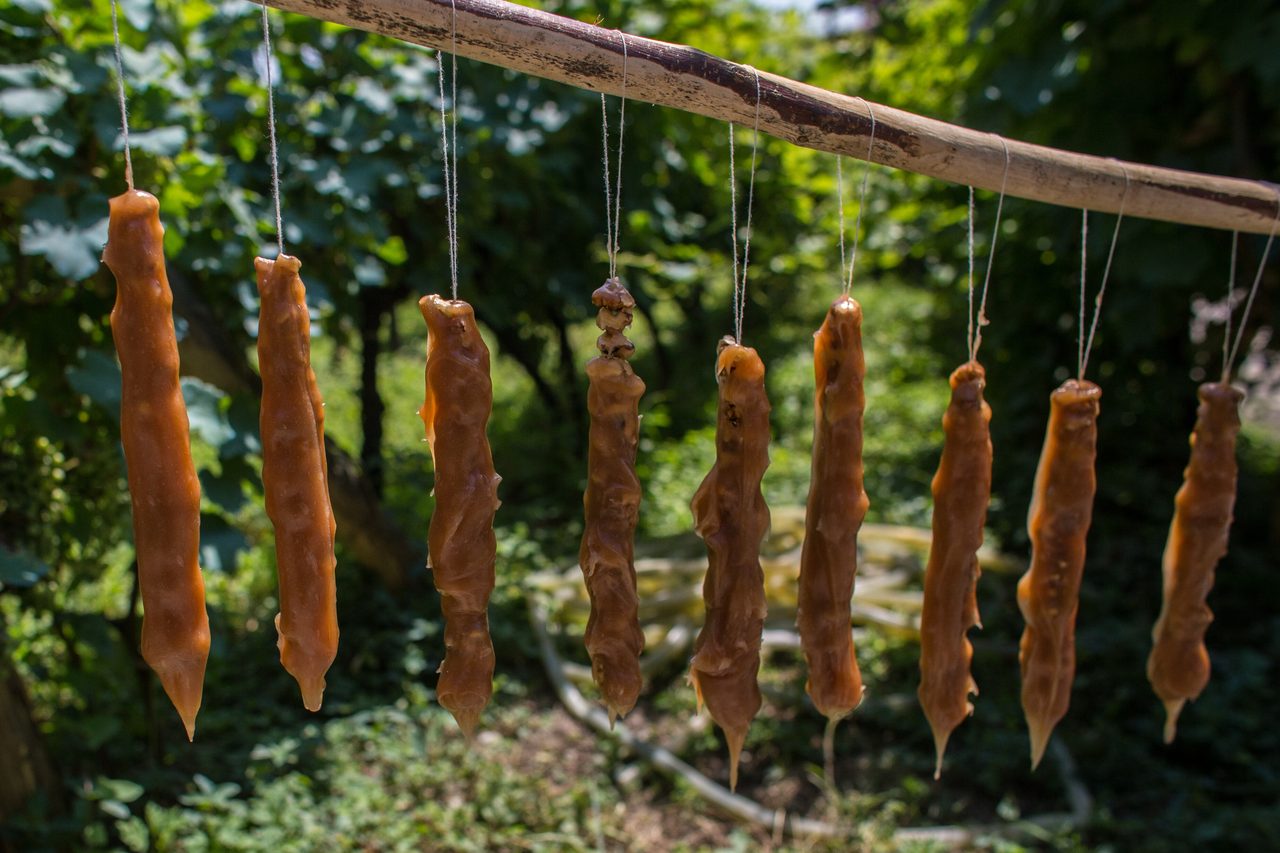
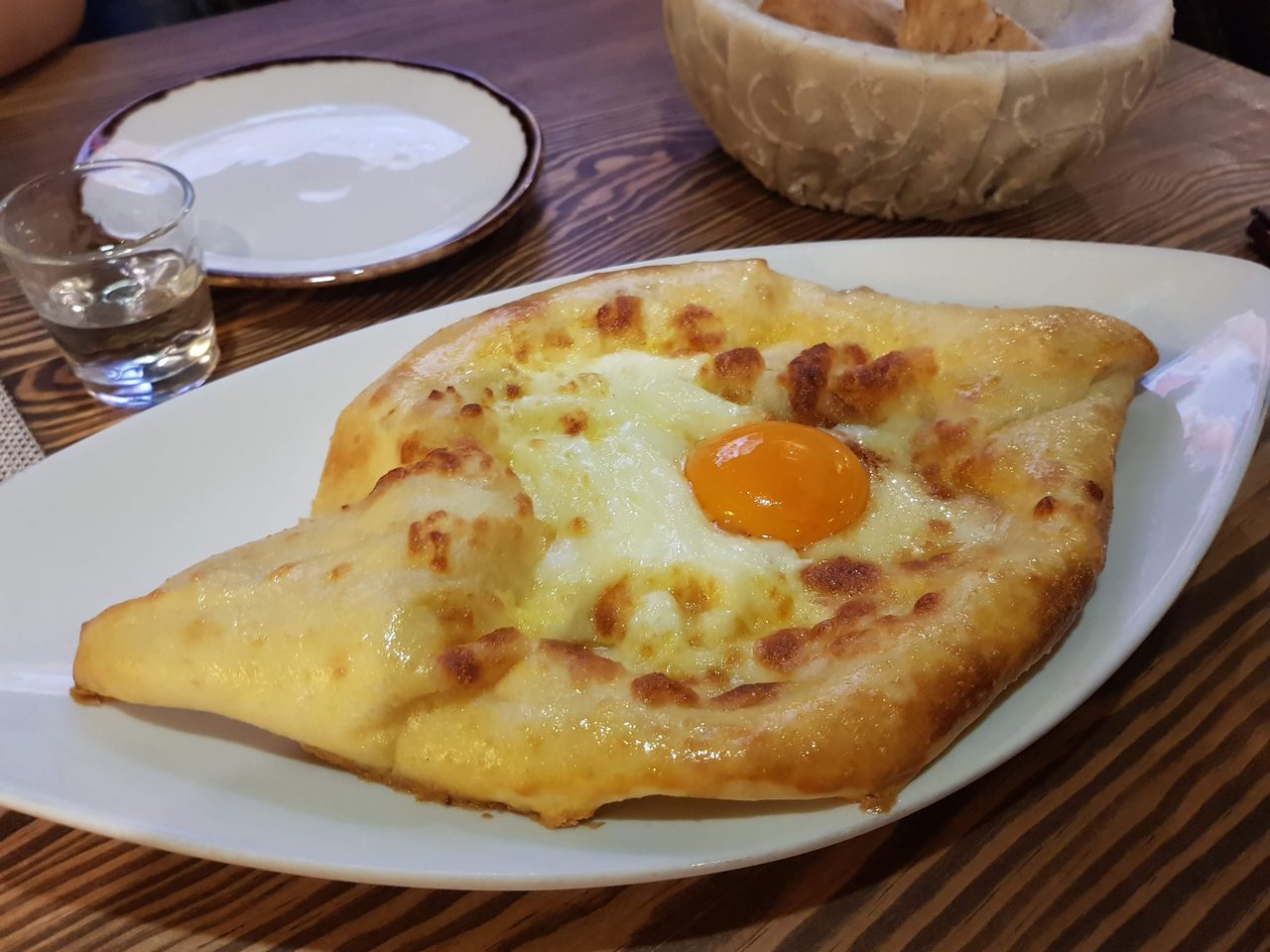
- With the rest of the Georgian table: khachapuri is the bread and churchkhela is the sweet. The three of them together is the usual spread.
The basics behind this dish
- Browning and the Maillard ReactionMeat fails to brown for one of three reasons: it is wet, the pan is cool, or you put too much in at once. Plus how the brown film stuck to the pan becomes your sauce.
- Cooking Meat: Temperature, Resting, and Cutting Against the GrainDoneness is a core temperature, not a number of minutes. What resting actually does, how to handle a thick cut, and why the direction you slice changes the texture.
- Knife Skills: Grip, Cuts, and Why Size MattersHow you hold the knife matters more than how fast you cut. The pinch grip, the claw hand, and why uniform size is a cooking decision rather than a cosmetic one.
More of the same kind


More from this country


Sign in to edit.
AI-drafted, editor-reviewed · edits: 0 ·Edit history
https://cookiki.com/en/r/khinkali · cookiki · User contributions are licensed under CC BY-SA 4.0.