
Photo: Obsidian Soul · CC0
Nata de Coco (Fermented Coconut Jelly)
The Filipino sweet in which coconut water is fermented into a jelly. Every ferment on this site transforms a substrate — the cabbage in kimchi is still cabbage, the beans in miso are still beans, and the beans in tempeh are knitted together by hyphae but they are still beans. Nata de coco is the one where that is not true. Bacteria eat the sugar in coconut water and excrete cellulose, and the cellulose piles up at the surface as a mat. What you eat is the cellulose the bacteria built; the coconut water was fuel and is gone.
Ingredients
- The nata mat (two trays)
- coconut water · from mature coconuts; tinned is fine if unsweetened1 L
- sugar100 g
- vinegar · to bring it down to about pH 460 ml
- starter · a piece of a previous mat, or the mother from unpasteurised coconut vinegar; see the tips100 ml
- To candy it
- sugar200 g
- water400 ml
- pandan leaf · optional, tied in a knot1
Steps
- ⏲ 15 min
Strain the coconut water through muslin, add the sugar and boil it five minutes. Let it go completely cold — hot liquid kills the starter.
- ⏲ 5 min
Stir the vinegar into the cooled liquid. These bacteria want about pH 4 and coconut water is nearly neutral, so the acid here is brought in rather than made — pikliz is the other dish on this site that does that.
- ⏲ 5 min
Pour it into wide, shallow trays to a depth of 2-3cm. The depth is the thickness of the mat. In a deep vessel there is very little surface and you get one thin sheet.
- ⏲ 5 min
Lay the starter gently on the surface, cover with muslin and secure it with a band. Air has to get in and insects must not — these bacteria need oxygen to grow.
Leave it at 28-30°C for ten days to a fortnight, without moving the tray. The mat is built at the surface, and knocking it makes the sheet sink, after which the bacteria start a new one on top from scratch.
- ⏲ 10 min
When there is a translucent mat 1.5-2cm thick on the surface, lift it out carefully. Rinse off the soft layer clinging underneath, and keep a piece back for the next batch.
- ⏲ 30 min
Cut the mat into 1cm cubes, rinse them in cold water and then boil them in fresh water, changing it two or three times, until no sourness is left at all. This is where the vinegar you added goes.
- ⏲ 10 min
Make a syrup with the sugar, water and pandan and simmer the cubes in it ten minutes. Take it off the heat, let it cool in the syrup and refrigerate. It keeps about a fortnight.
Tips & Variations
Variations
- Nata de piña: the original, made from pineapple juice and produced since the eighteenth century. As ko.wikipedia records, nata de coco was developed in 1949 by Teódula Kalaw África, a chemist at the Philippine National Coconut Corporation, as an alternative to nata de piña, which depended on a pineapple harvest. Commercial production began in 1954, and the process was optimised in the mid-1970s by a team of microbiologists led by Priscilla C. Sánchez.
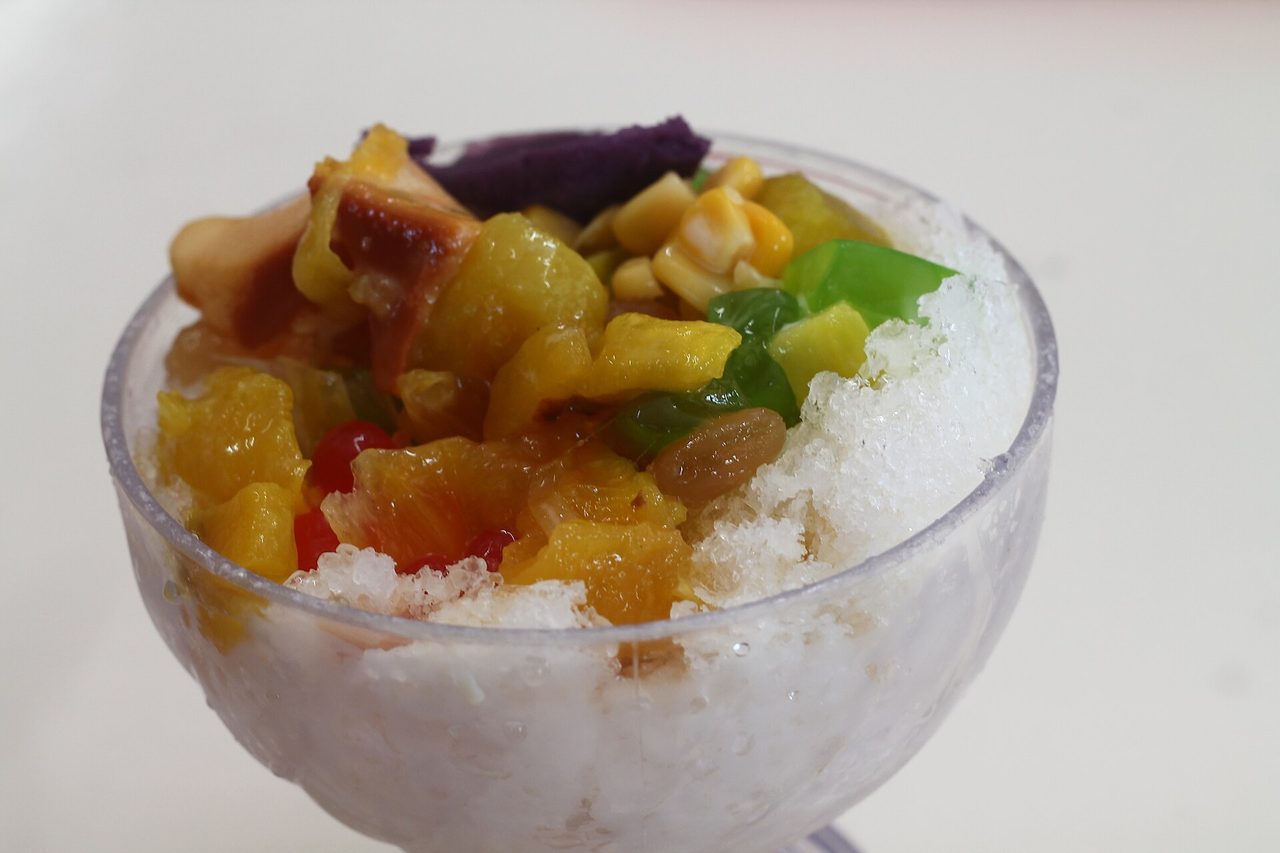
- Coloured: the commercial product is dyed red, green or pink. The photograph on this page is the red one. A mat as it comes out is whitish and translucent, and the colour goes in with the syrup.
- In halo-halo: where most people in the Philippines meet it. When that page argues for one soft thing against one crisp one, this is the crisp one.
- In drinks: the chewy pieces in bottled jelly drinks are this.
- The same material as a kombucha pellicle: cellulose built by the same family of bacteria. In kombucha it is the thing you throw away; here it is the food.
- Industrially, nitrogen is added: a nitrogen source such as ammonium sulphate raises the yield. At home you can leave it out and the ferment simply takes a few days longer.
Tips
- It is not a ferment that transforms an ingredient; it is one that manufactures a new one. The cabbage in kimchi is still cabbage afterwards, the beans in miso are still beans, and the beans in tempeh are knitted together by hyphae but they are still beans. Here the bacteria eat the sugar and excrete cellulose, and the cellulose piles up at the surface as a mat. What reaches the plate is cellulose the bacteria built, and the coconut water was fuel and is gone. Tempeh is the closest and the difference is exact: there the hyphae bind beans that are still the food, and here there is no substrate left in the product at all.
- Having no flavour is the point. Pure cellulose has no taste and no smell and humans cannot digest it, so it carries almost no calories, and so it is always sold in syrup. Every other ferment here exists for what it tastes like. This one exists for a texture.
- Do not touch the tray. These bacteria need oxygen, so the mat is built at the boundary between liquid and air. Knock it once and the sheet sinks and a new one starts above it, leaving you two thin sheets. Natto and miso also let air in deliberately, but here the growth is at the interface itself (fermentation basics).
- Shallow and wide. The depth is the thickness and the area is the yield. The same litre in a deep bowl gives far less.
- The acid is poured in. Fermentation basics says the safety of a ferment comes from the acidity dropping, and kimchi and paocai make that acid themselves. Here it comes out of a bottle, as it does in pikliz.
- Boiling the sourness out is not optional. Skip it and the vinegar is still there under the syrup. Thicker cubes take longer.
- Against tokoroten and yokan: those set a gel from a seaweed polysaccharide, and agar melts again above about 85°C. Cellulose does not melt at all, which is why the cubes hold their shape through boiling and candying.
- If you have no starter: the mother at the bottom of a bottle of unpasteurised coconut vinegar is the easiest one to find. A batch that fails outright has usually been too cool or not acid enough.
The basics behind this dish
- Fermentation Basics: Salt, Temperature, and AirFermentation is controlled spoilage. You control it with exactly three levers — salt, temperature, and keeping air out — and the failure signs are unambiguous.
- Eggs: Coagulation Temperatures and What They DecideWhite sets at 62°C, yolk at 68°C. Those two numbers explain scrambled eggs, boiled eggs, steamed custard and crème anglaise all at once.
- Why Sauces Split: Emulsions and Pan SaucesA cream sauce breaking and a carbonara scrambling are the same failure. Temperature and emulsifiers — plus how to bring a split sauce back.
More of the same kind


More from this country


Sign in to edit.
AI-drafted, editor-reviewed · edits: 0 ·Edit history
https://cookiki.com/en/r/nata-de-coco · cookiki · User contributions are licensed under CC BY-SA 4.0.