
Canelé (Beeswax-Lined Mould, Burnt Crust, Custard Middle)
The little cake of Bordeaux, and the only recipe on this site with beeswax in the ingredient list. The batter is not a cake batter but nearly a crêpe batter, and it rests a day or two in the fridge. That liquid batter goes into a copper mould lined with wax and butter and bakes at 250°C until the outside is very nearly burnt. Where browning and Maillard treats a scorched surface as failure, a canelé aims at it — and while that thick shell forms, the inside stays a barely-set custard. The wax is what makes it possible: at that temperature it does not burn the way butter would, it lacquers the crust hard, and it lets the thing come out of the mould.
Ingredients
- The batter (12 moulds) - made the day before
- whole milk500 ml
- butter50 g
- vanilla pod · split; or 1 tbsp vanilla extract1
- sugar230 g
- plain or cake flour · sifted110 g
- eggs2
- egg yolks2
- dark rum50 ml
- salt1 pinch
- Lining the moulds
- food-grade beeswax · white pellets; there is nothing to swap it for50 g
- clarified butter · mixed 2:1 with the wax25 g
Steps
- ⏲ 10 min
Heat the milk with the butter and the split vanilla pod to just short of a boil and take it off. In a big bowl, mix the sugar with the sifted flour.
- ⏲ 5 min
Beat the eggs and yolks lightly and stir them into the sugar and flour, only until smooth. Do not whip any air in — nothing here needs to rise.
- ⏲ 5 min
Pour the hot milk in gradually, stirring, then the rum and salt. The finished batter is thin. It is close to a crêpe batter, and if it looks like a cake batter something is wrong.
- ⏲ 240 min
Strain it, cover it and rest it 24-48 hours in the fridge. In that time the flour hydrates fully and the gluten relaxes; baked straight away, the inside comes out spongy instead of custardy (dough and gluten).
- ⏲ 15 min
Melt the beeswax with the clarified butter and hold it at about 60°C. Heat the copper moulds in the oven until hot, fill one to the brim with the wax and immediately pour it back out. Stand the mould upside down to drain and let it set hard. What stays behind should be a very thin film.
- ⏲ 10 min
Heat the oven to 250°C. Stir the batter (it separates overnight) and fill each mould only 80% full — it climbs and overflows.
- ⏲ 75 min
15 minutes at 250°C, then drop to 180°C for another 55-65 minutes. The first heat builds the shell; the lower one cooks the inside (what your oven is actually doing).
- ⏲ 5 min
If the batter rises up out of the moulds partway through, push it back down with a spoon. Doing that two or three times is normal, and skipping it gives you a top hat.
- ⏲ 10 min
Take them out when the outside is very nearly black mahogany. Still pale means still underdone. Turn them out at once onto a rack — cooled in the mould, the crust takes up moisture and goes soft.
Tips & Variations
Variations
- Leave the wax out and it is a different cake. Butter alone will bake, but at 250°C butter's milk solids burn and the crust never sets that hard. The wax does three things: it survives that temperature, it lacquers the crust as it cools, and it releases the cake from the mould. It belongs with kanelbulle's pearl sugar among the ingredients with no substitute.
- Copper moulds. Traditional, and the reason is conductivity. Silicone will not take the outside anywhere near this colour. Aluminium is the compromise.
- Against madeleines. Both are small French cakes baked in a dedicated mould, and they sit at opposite ends. A madeleine goes in as a stiff batter, cold, aiming at a risen hump, and comes out pale gold. A canelé goes in as a thin batter rested a day, is prevented from rising, and comes out nearly burnt.
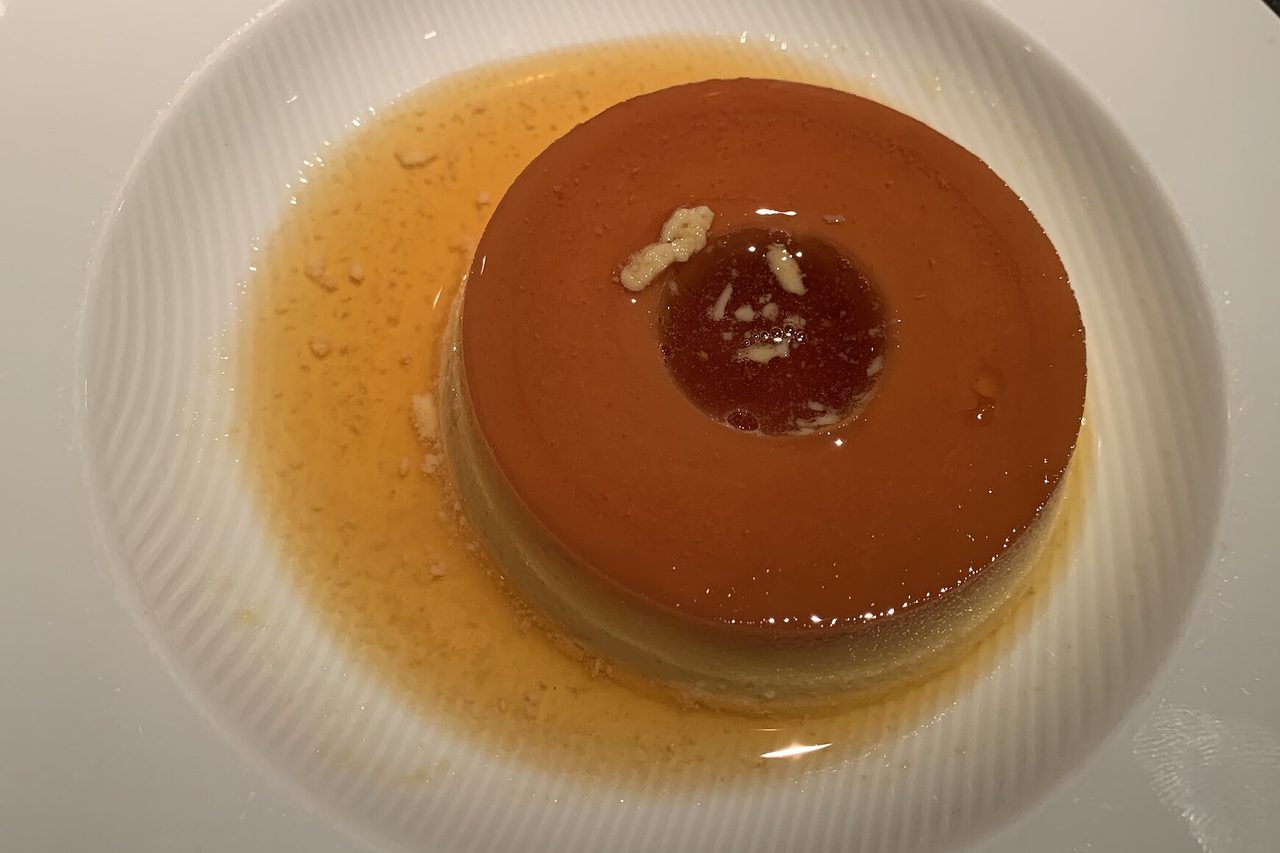
- How it relates to crème brûlée and crème caramel. Those protect a custard in a water bath and cook it at low temperature. A canelé puts a custard into a 250°C oven with nothing protecting it — its own shell forming is the protection. The same family of answer as clafoutis using starch to raise the egg's setting temperature so it needs no bain-marie.
- Size and spelling. The large mould (5.5cm across) is standard, and small ones exist. In Korean it is more often written 카눌레 or 까눌레 after the pronunciation than 카늘레.
- Flavoured versions. Chocolate, matcha and coffee are all common now; the original is rum and vanilla and nothing else.
- When to eat one. The peak is two or three hours out of the oven. A day on, moisture from the inside has moved into the crust and the crispness is gone. Five minutes at 200°C brings it back.
Tips
- Never whip the batter. Air in it turns the inside spongy. Not rising is the objective here.
- Do not skip the overnight rest. It is the step most often left out and the one that changes the result most.
- Keep the wax film thin. Too thick and you taste wax. Pouring it into a hot mould, tipping it straight back out and standing the mould upside down is how.
- Coat the moulds hot. Poured into a cold mould the wax sets on contact and stays thick.
- Stir as you fill. The flour settles overnight.
- Pale means underdone. The outside has to go this dark for the inside to stay custard; pulled at a hesitant brown, the middle is still batter.
- Reuse the wax. Let what drained off set, and melt it again next time.
The basics behind this dish
- What Your Oven Is Actually DoingThe dial and the air rarely agree. Why preheating takes twenty minutes rather than five, why convection means lowering the number, and what an air fryer actually is.
- Grilling: Distance, Zones, and Flare-UpsOn a grill the heat is radiant, so distance is temperature. Why you build two zones, why a flare-up means you are already late, and why sugary marinades go on at the end.
- Eggs: Coagulation Temperatures and What They DecideWhite sets at 62°C, yolk at 68°C. Those two numbers explain scrambled eggs, boiled eggs, steamed custard and crème anglaise all at once.
More of the same kind



More from this country


Sign in to edit.
AI-drafted, editor-reviewed · edits: 0 ·Edit history
https://cookiki.com/en/r/canele · cookiki · User contributions are licensed under CC BY-SA 4.0.